
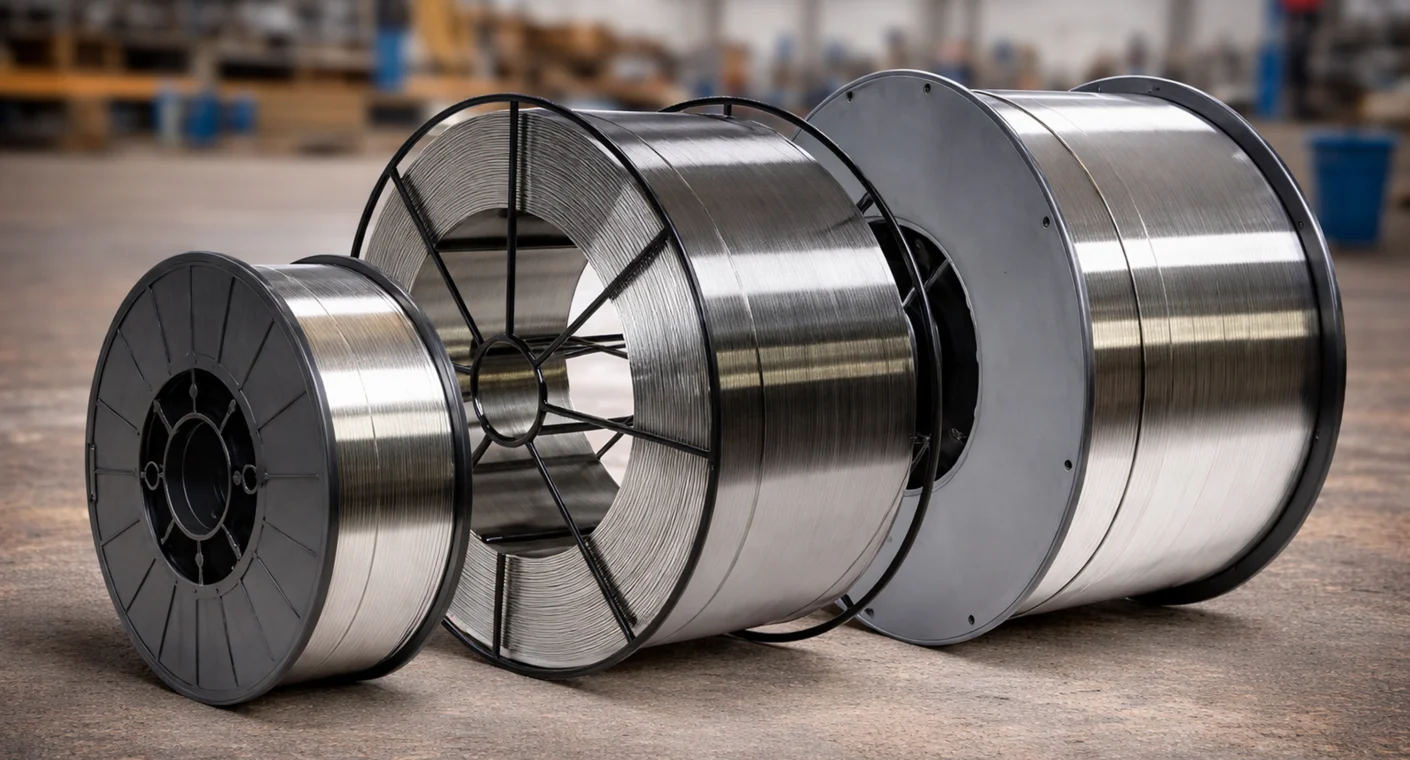
Premium Stainless Steel Welding Wire Manufacturer in India
RATANAKAR Wire Private Limited (RWPL) is a leading Stainless Steel Welding Wire Manufacturer in India and a trusted Stainless Steel Welding Wire Supplier, delivering precision-engineered SS Welding Wire and advanced MIG/TIG welding wire solutions for high-performance welding, fabrication, and joining applications across critical industries. With over 30 years of manufacturing expertise and an ISO 9001:2015-certified facility in Pithampur, Madhya Pradesh, Ratanakar supplies High-Quality SS Welding Wire and Stainless Steel wire across India and global markets with consistent quality, superior weld integrity, and reliable delivery.
Our Stainless Steel Welding Wire products are engineered to deliver outstanding arc stability, excellent weld bead appearance, superior mechanical properties, minimal spatter, and precise chemical composition control, critical for welding stainless steel components, structures, pressure vessels, pipelines, and precision assemblies used across automotive, oil & gas, chemical processing, food & beverage, pharmaceutical, aerospace, power generation, and marine sectors. As a trusted SS Welding Wire manufacturer and Stainless Steel Welding Wire Exporter, we offer multiple grades, diameters, welding processes (MIG/TIG/SAW), and spool configurations to meet the most demanding welding specifications and international standards.
Stainless Steel Welding Wire - Technical Specifications
RWPL supplies Stainless Steel Welding Wire conforming to AWS A5.9, AWS A5.22, EN ISO 14343, DIN 8556, and other international welding standards. The table below outlines the standard specification range:
| Parameter | Details |
| Welding Process | MIG (GMAW), TIG (GTAW), SAW (Submerged Arc Welding), Plasma Arc Welding |
| Diameter Range | 0.6 mm – 4.0 mm (MIG/TIG); custom sizes on request |
| Available Grades | ER 308, ER 308L, ER 309, ER 309L, ER 316, ER 316L, ER 310, ER 321, ER 347, ER 410, ER 430, ER 2209 (Duplex) and equivalent AWS/EN/DIN designations |
| Base Material Compatibility | AISI 304, 304L, 316, 316L, 310, 321, 347, 410, 430, Duplex 2205, dissimilar metal welding |
| Standards Compliance | AWS A5.9, AWS A5.22, EN ISO 14343, DIN 8556, ASME SFA-5.9, BIS IS 15599, ISO 9001:2015 |
| Surface Condition | Bright, Smooth, Copper-Coated (optional), Oxide-Free, Clean |
| Tensile Strength | 550 MPa – 750 MPa (weld metal, grade dependent) |
| Elongation | 30% – 45% (weld metal) |
| Chemical Composition | Controlled to AWS/EN specifications for consistent weld quality |
| Diameter Tolerance | ±0.02 mm to ±0.05 mm (as per AWS A5.9 / EN ISO 14343) |
| Spool/Package Type | Plastic spools (K300, D300, D200, S200), cardboard spools, wire baskets, drums, coils |
| Spool Weight | 1 kg, 5 kg, 15 kg, 25 kg, 50 kg; custom weights available |
| Shielding Gas | Argon, Argon + CO₂ mixtures, Tri-mix (Ar + He + CO₂) for MIG; Pure Argon for TIG |
| Packaging | Vacuum-sealed polybags, carton boxes, wooden/plastic pallets; moisture-proof, export-grade packing |
| Custom Options | Grade, diameter, spool size, spool weight, copper coating, special packaging, private labelling |
Stainless Steel Welding Wire Grades - Comparison & Selection Guide
Understanding stainless steel welding wire grades helps in selecting the right filler material for base metal compatibility, corrosion resistance, mechanical properties, and service environment. RWPL supplies the following welding wire grades conforming to AWS and EN standards:
| AWS Grade | EN Designation | Base Material | Key Properties | Best Applications |
| ER 308 | W 19 9 | AISI 304, 308 | Excellent general-purpose grade, good corrosion resistance | General stainless steel fabrication, tanks, structural welding |
| ER 308L | W 19 9 L | AISI 304L, 308L | Low carbon, excellent weldability, no carbide precipitation | Welded assemblies, food processing equipment, chemical tanks |
| ER 309 | W 23 12 | Dissimilar metals, mild steel to SS | Higher alloy content, dissimilar metal joining | Joining stainless steel to carbon steel, buffer layers, and overlays |
| ER 309L | W 23 12 L | Dissimilar metals, mild steel to SS | Low-carbon, dissimilar metal welding | Dissimilar welding, cladding, and repair welding |
| ER 316 | W 19 12 3 | AISI 316 | Superior corrosion resistance, Mo-bearing | Marine, chemical processing, pharmaceutical equipment |
| ER 316L | W 19 12 3 L | AISI 316L | Low carbon + Mo, excellent corrosion resistance | High-purity welding, pharmaceutical, marine, food & beverage |
| ER 310 | W 25 20 | AISI 310, high-temp applications | Excellent high-temperature oxidation resistance | Furnace components, high-temperature piping, heat exchangers |
| ER 321 | W 19 9 Nb | AISI 321 | Ti-stabilised, resists intergranular corrosion | Aerospace, exhaust systems, high-temperature applications |
| ER 347 | W 19 9 Nb | AISI 347 | Nb-stabilised, excellent weldability | Nuclear, chemical processing, high-temperature service |
| ER 410 | W 13 Cr | AISI 410 | Martensitic, high hardness, heat-treatable | Oil & gas, valve stems, pump shafts, hardened components |
| ER 430 | W 19 Cr | AISI 430 | Ferritic, magnetic, moderate corrosion resistance | Automotive exhaust, decorative welding, general fabrication |
| ER 2209 | W 22 9 3 N L | Duplex 2205 | High strength + corrosion resistance, duplex structure | Offshore platforms, chemical plants, seawater applications |
Grade Selection Tips
ER 308L vs ER 308: ER 308L is the low-carbon version preferred for most stainless steel welding applications to prevent carbide precipitation and intergranular corrosion in heat-affected zones. Use ER 308 only when higher carbon content is specifically required.
ER 316L - Marine & Chemical Service: Specify ER 316L when welding components exposed to chlorides, seawater, acids, or aggressive chemical environments. The molybdenum content significantly improves pitting and crevice corrosion resistance.
ER 309/309L - Dissimilar Metal Welding: Use ER 309/309L when joining stainless steel to carbon steel, low-alloy steel, or as a buffer layer before cladding. The higher chromium and nickel content accommodates dilution from carbon steel.
ER 310 - High Temperature: Select ER 310 for welding components operating continuously above 550°C in oxidising atmospheres where standard austenitic grades would lose strength and oxidation resistance.
ER 2209 - Duplex Applications: Specify for welding duplex stainless steels in offshore, marine, and chemical processing applications requiring superior strength and corrosion resistance compared to standard austenitic grades.
Manufacturing Process & Quality Assurance
At Ratanakar, every stainless steel welding wire is manufactured under strict quality controls to ensure consistent composition, dimensional accuracy, surface cleanliness, and reliable welding performance.
- Raw Material Selection: Production begins with premium stainless steel wire rods sourced from certified steel mills. Each batch is verified through chemical composition testing to ensure compliance with international standards.
- Precision Wire Drawing: Wire rods are drawn through multiple stages using precision dies to achieve the required diameter, surface finish, and mechanical properties while maintaining tight tolerances.
- Heat Treatment & Surface Preparation: Controlled annealing processes restore corrosion resistance, ductility, and weldability. The wire is then cleaned and treated to remove surface contaminants, ensuring optimal welding performance.
- Precision Spooling: Automated spooling systems ensure uniform winding, smooth wire feeding, and tangle-free operation in manual and automated welding applications.
- Quality Control & Testing: Every batch undergoes rigorous testing, including:
- Chemical composition analysis
- Diameter and tolerance verification
- Tensile strength testing
- Weld bead evaluation
- Surface quality inspection
- Moisture-Proof Packaging: Finished spools are securely packed in moisture-resistant packaging to prevent contamination, oxidation, and damage during storage and transportation.
Through advanced manufacturing processes and comprehensive quality assurance, Ratanakar delivers stainless steel welding wire that meets international standards and ensures consistent performance across demanding industrial applications.
Certifications & Standards
ISO 9001:2015 Quality Management System
Products manufactured as per: AWS A5.9 | AWS A5.22 | EN ISO 14343 | DIN 8556 | ASME SFA-5.9 | BIS IS 15599 | JIS Z 3321 | ISO standards
Material Test Reports (MTR) and Certificates of Conformance (COC) are provided with every shipment
Welding Procedure Specification (WPS) and Procedure Qualification Record (PQR) support is available
Third-party inspection (TPI) and pre-dispatch inspection are supported on request
CE Marking and export documentation compliance
Applications of Stainless Steel Welding Wire
Stainless Steel Welding Wire is widely used across diverse fabrication, construction, maintenance, and manufacturing applications requiring high-integrity welds, corrosion resistance, and reliable mechanical performance. Explore common Stainless Steel Welding Wire applications across key industries. The table below covers primary sectors and application examples:
| Industry | Applications |
| Oil, Gas & Petrochemical | Pipeline welding, pressure vessel fabrication, storage tanks, refinery equipment, offshore platforms |
| Chemical Processing | Reactor vessels, heat exchangers, process piping, storage tanks, acid-resistant equipment |
| Food & Beverage | Hygienic tanks, processing equipment, brewing vessels, dairy equipment, stainless piping |
| Automotive | Exhaust systems, catalytic converters, fuel tanks, structural welding, chassis components |
| Construction & Architecture | Structural steel welding, handrails, balustrades, cladding, decorative welding |
| Industrial Machinery | Machine frames, conveyor systems, process equipment, fabricated structures |
| Water Treatment | Desalination plants, water tanks, treatment equipment, corrosion-resistant piping |
Welding Applications by Process:
MIG Welding (GMAW):
High-speed production welding
Automated and robotic welding systems
Thick section welding with high deposition rates
General fabrication and structural welding
TIG Welding (GTAW):
High-quality, precision welding
Thin-wall tubing and sheet metal welding
Root pass welding in critical applications
Aerospace, pharmaceutical, and food-grade welding
SAW Welding (Submerged Arc):
Heavy-section welding with deep penetration
Longitudinal and circumferential seam welding
Pressure vessel and tank fabrication
High-productivity automated welding
Key Features & Performance Advantages
- Superior Arc Stability: Precision-controlled chemical composition and clean, oxide-free surface finish deliver smooth, stable arc characteristics with consistent arc length and minimal arc wandering, ensuring predictable weld quality and easier welder control across varying welding positions and parameters.
- Excellent Weld Bead Appearance: Optimised wire chemistry and surface condition produce uniform, smooth weld beads with fine ripple patterns, minimal undercut, and excellent tie-in to base metal, reducing post-weld finishing requirements and delivering aesthetically superior welds for visible applications.
- Minimal Spatter & Fume: Low impurity content, controlled silicon and manganese levels, and premium wire surface quality minimise weld spatter generation and welding fume emissions, improving welder safety, reducing cleanup time, and lowering consumable waste.
- Consistent Chemical Composition: Batch-to-batch chemical composition control within tight AWS/EN specification limits ensures predictable weld metal properties including tensile strength, ductility, corrosion resistance, and ferrite content, critical for code-compliant welding in pressure vessels and piping systems.
- High Tensile Strength & Ductility: Weld metal deposits achieve specified minimum tensile strength (550-750 MPa) and elongation (30-45%), meeting or exceeding base metal properties, ensuring structural integrity and load-bearing capability in welded assemblies.
- Excellent Corrosion Resistance: Austenitic and duplex welding wire grades deliver inherent resistance to general corrosion, pitting, crevice corrosion, stress corrosion cracking, and intergranular attack in aggressive chemical, marine, and high-temperature service environments.
- Smooth Wire Feeding: Precision diameter tolerances (±0.02-0.05 mm), uniform surface finish, and controlled wire cast (curvature) ensure smooth, consistent wire feeding through MIG welding guns and automatic wire feeders without jamming, bird-nesting, or erratic feeding.
- Low Defect Rate: Rigorous quality control and surface inspection eliminate wire surface defects such as seams, laps, pits, and inclusions that can cause weld porosity, slag inclusions, and mechanical property degradation, delivering consistently sound welds.
- Wide Operating Window: Formulated for stable performance across broad welding current, voltage, and travel speed ranges, accommodating varying welder skill levels and enabling process optimisation for specific joint configurations and production requirements.
- Certified Quality: Full material traceability with heat number identification, Material Test Reports (MTR) documenting chemical composition and mechanical properties, and compliance with AWS/EN/ASME codes supporting critical applications in pressure equipment, nuclear, and aerospace sectors.
- Sustainable Manufacturing: Energy-efficient production processes, recycled raw material content where applicable, and responsible sourcing from certified mills supporting customers’ environmental and sustainability commitments.
Why Choose Ratanakar as Your Stainless Steel Welding Wire Supplier?
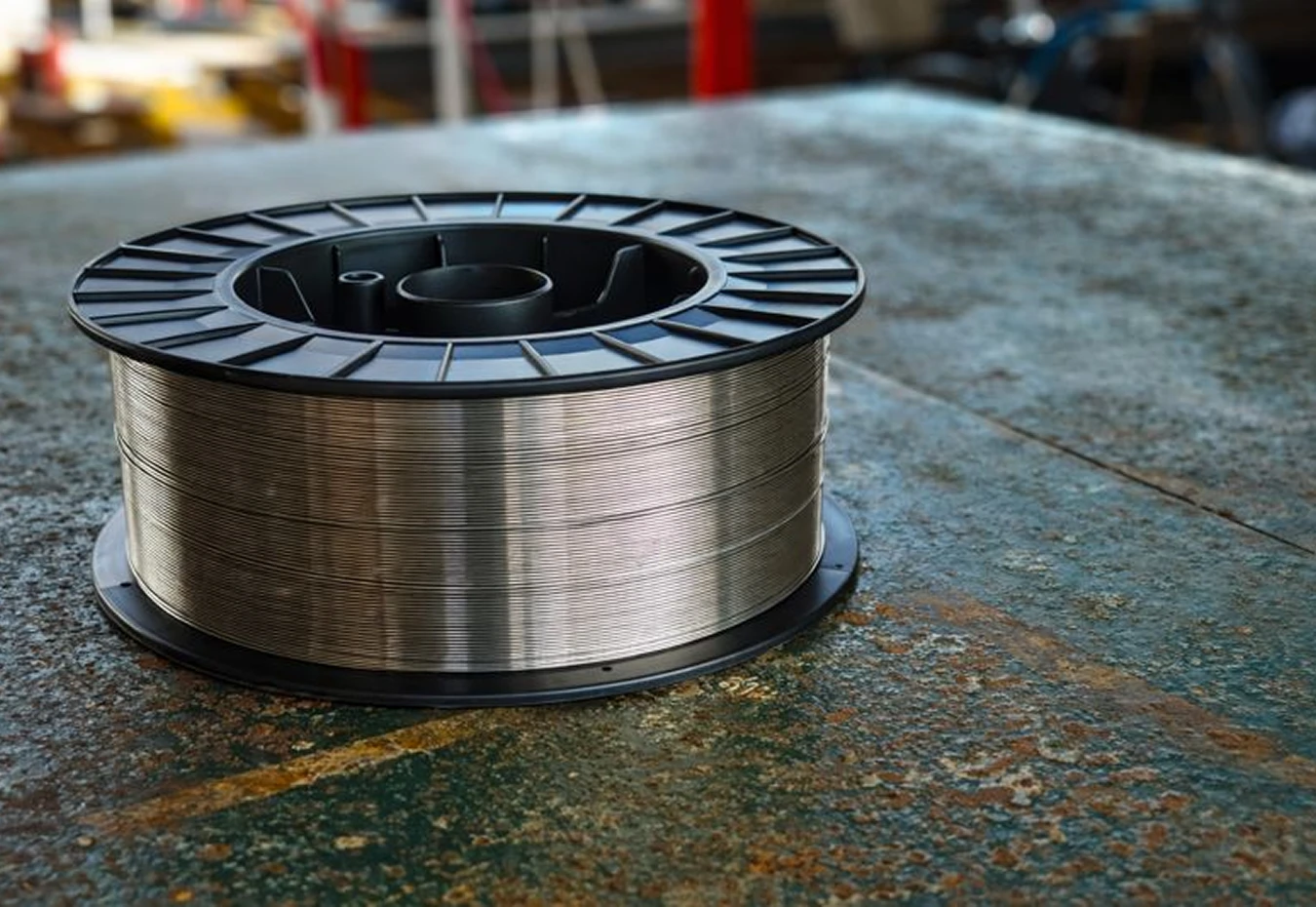
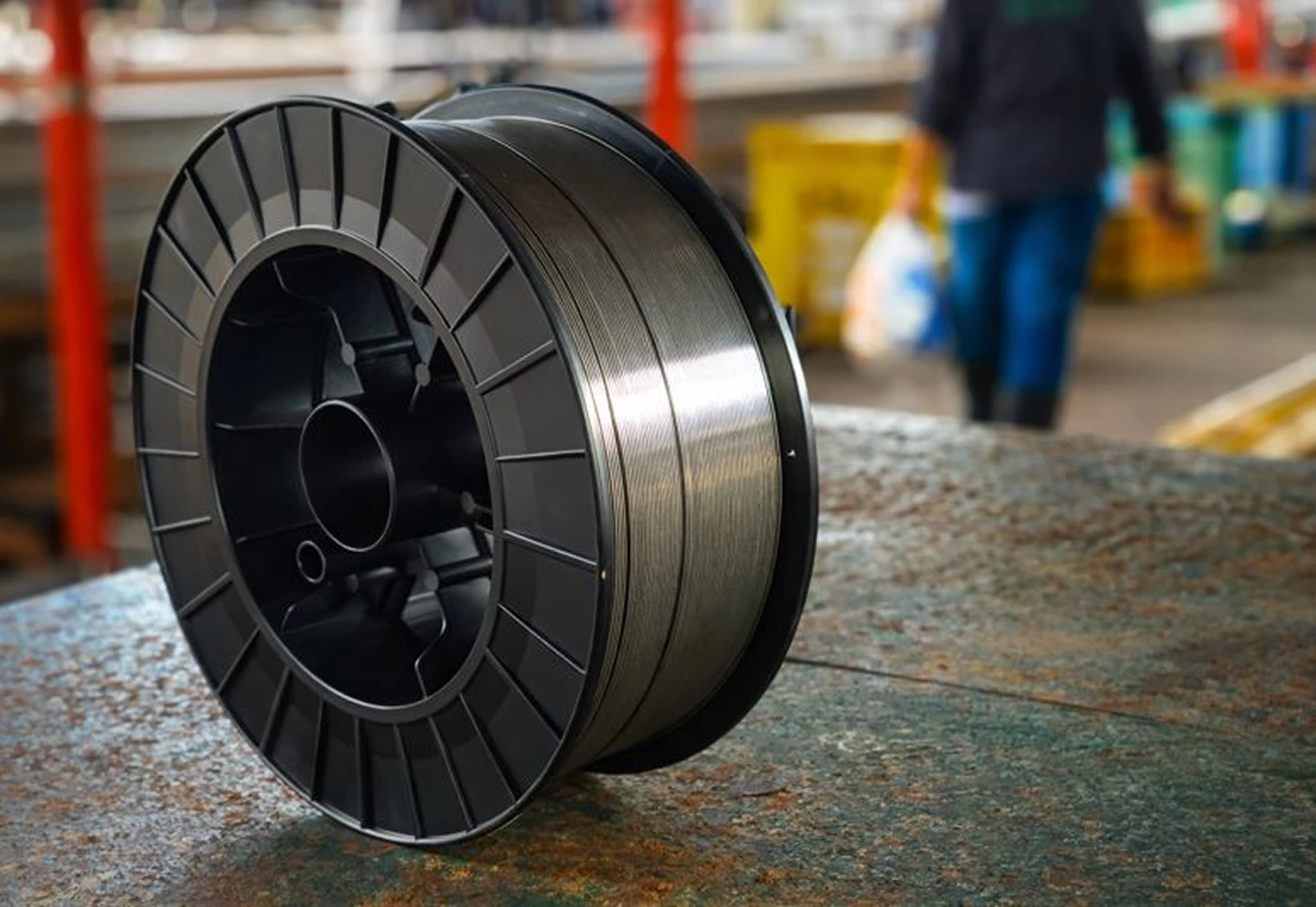
India’s fabrication, shipbuilding, pressure vessel manufacturing, and precision welding sectors demand a Stainless Steel Welding Wire Supplier that combines deep welding metallurgy knowledge, consistent wire quality, and dependable supply chain performance. Here is why leading fabricators and welding professionals across India and global markets prefer RATANAKAR Wire Private Limited:
- 30+ Years of Manufacturing Expertise: Deep metallurgical knowledge and welding wire production experience built over three decades of specialised stainless steel product manufacturing, ensuring technically sound solutions for complex, critical welding applications across diverse industries.
- State-of-the-Art Production Facility: Dedicated welding wire manufacturing lines including multi-stage precision wire drawing mills, controlled-atmosphere bright annealing furnaces, automated chemical cleaning and surface treatment systems, copper-coating equipment, precision tension-controlled spooling machines, and advanced quality testing laboratories.
- In-House Welding Laboratory: Comprehensive welding test facility equipped with MIG/TIG/SAW welding equipment, weld coupon preparation, tensile testing machines, hardness testers, ferrite meters, radiographic/ultrasonic NDT equipment, and metallographic analysis capability for weld procedure development and qualification support.
- ISO 9001:2015 Certified Quality System: Systematic quality management covering incoming material verification, in-process inspection, finished product testing, packaging control, and full lot traceability with documented quality records ensuring consistent, code-compliant welding wire production.
- AWS/EN Standards Compliance: All welding wire grades manufactured to strict AWS A5.9, AWS A5.22, EN ISO 14343, and ASME SFA-5.9 chemical composition, mechanical property, and dimensional tolerance requirements with batch testing and certification.
- Custom Packaging Solutions: Flexible spool weights (1 kg to 50 kg), spool types (plastic K300, D300, cardboard, wire baskets), vacuum-sealed moisture-proof packaging, private labeling, colour-coded identification, and export-grade wooden crate packing tailored to customer requirements.
- Technical Support & WPS Development: Pre-order welding process consultation, filler metal selection guidance based on base material and service conditions, welding parameter recommendations, and post-order technical support including Welding Procedure Specification (WPS) development assistance for critical applications.
- Pan-India & Global Supply Network: Reliable logistics and distribution ensuring timely delivery of SS Welding Wire to fabrication shops, shipyards, pressure vessel manufacturers, and construction sites across Maharashtra, Gujarat, Tamil Nadu, Punjab, Haryana, Delhi NCR, Karnataka, Andhra Pradesh, West Bengal, and all major industrial hubs, plus export capabilities worldwide.
- Competitive Pricing: Direct manufacturer pricing without distributor or trader margins, bulk order discounts, flexible payment terms, and transparent pricing structure ensuring cost-effective stainless steel welding wire manufacturing solutions for high-volume industrial buyers.
- Export Ready Documentation: As a leading Stainless Steel Welding Wire Exporter, we provide complete export documentation including Material Test Reports (MTR), Certificates of Conformance (COC), Mill Test Certificates, commercial invoices, packing lists, certificate of origin, and compliance with international import regulations for seamless customs clearance.
Looking for a reliable stainless steel welding wire supplier? Contact our team for product recommendations and custom requirements.
What is Stainless Steel Welding Wire used for?
Stainless steel welding wire is used as filler metal for MIG, TIG, and SAW welding processes. It is widely used in oil & gas, chemical processing, food processing, pharmaceuticals, marine, automotive, and construction industries to create strong, corrosion-resistant welds.
Which Stainless Steel Welding Wire grade should I choose?
The appropriate grade depends on the base metal and application. ER308L is commonly used for 304 stainless steel, ER316L for marine and chemical environments, ER309L for dissimilar metal welding, and ER2209 for duplex stainless steel applications.
What is the difference between ER308L and ER316L welding wire?
ER308L is primarily used for welding 304/304L stainless steel, while ER316L contains molybdenum for enhanced resistance to corrosion, chemicals, and chloride-rich environments. ER316L is preferred for marine and chemical processing applications.
Can Stainless Steel Welding Wire be used for both MIG and TIG welding?
Yes. Most stainless steel welding wire grades are available for both MIG wire and TIG welding processes. The main difference lies in the wire diameter and packaging requirements for each welding application.
What shielding gas is recommended for Stainless Steel Welding Wire?
For MIG welding, argon-based gas mixtures are commonly used to achieve stable arc performance and high-quality welds. For TIG welding, pure argon is typically the preferred shielding gas.
How is Stainless Steel Welding Wire tested for quality?
Quality testing includes chemical composition analysis, diameter verification, tensile testing, weld bead evaluation, surface inspection, and compliance checks with AWS, EN, and ASTM standards to ensure consistent performance.
What standards apply to Stainless Steel Welding Wire?
Stainless steel welding wire is commonly manufactured according to AWS, EN, and ASTM standards. These standards ensure consistent chemical composition, mechanical properties, weldability, and product quality.
How do I choose a reliable Stainless Steel Welding Wire manufacturer?
Choose a manufacturer with proven industry experience, advanced testing capabilities, international quality certifications, consistent production standards, and strong technical support. Material test certificates and quality documentation are also important considerations.