Introduction
Choosing the right material is one of the most critical decisions in any industrial application. Whether in manufacturing, construction, automotive, electrical, or chemical processing, the performance, safety, and lifespan of the final product depend heavily on material quality.
Among the various metal wire options available today, stainless steel wires have emerged as the preferred choice across industries. Their superior strength, excellent corrosion resistance, long-term durability, and versatility make them suitable for both heavy-duty operations and precision applications.
This blog explains why stainless steel wires are the best choice for industrial applications, covering their key benefits, major uses, selection criteria, and the importance of sourcing from a trusted stainless steel wire manufacturer.
Key Benefits of Stainless Steel Wires
Excellent Corrosion Resistance
One of the biggest advantages of stainless steel wires is their exceptional corrosion resistance. Due to the presence of chromium, stainless steel forms a passive oxide layer that protects the material from rust and oxidation.
Why this matters in industries:
- Suitable for humid, marine, and outdoor environments
- Performs well in chemical and acidic conditions
- Reduces material degradation and failures
Industries such as chemical processing, marine engineering, construction, and oil & gas rely heavily on stainless steel wires for this reason.
High Tensile Strength & Durability
Stainless steel wires offer high tensile strength, allowing them to withstand heavy loads, stress, and repeated mechanical use without breaking or deforming.
Industrial advantages:
- Long service life
- Excellent fatigue resistance
- Reliable performance under constant stress
This makes stainless steel wires ideal for springs, fasteners, wire ropes, reinforcement, and structural applications.
Heat & Temperature Resistance
Many industrial environments involve high or fluctuating temperatures. Stainless steel wires maintain their mechanical properties even under extreme heat conditions.
Key benefits:
- Resistant to scaling and deformation at high temperatures
- Suitable for furnaces, exhaust systems, and automotive components
- Stable performance in thermal cycling conditions
Grades like SS 310 and SS 316 are especially valued for heat-resistant applications.
Low Maintenance & Long-Term Cost Efficiency
While stainless steel wires may have a higher initial cost than carbon steel wires, they are far more cost-effective in the long run.
Why industries save money:
- Minimal corrosion-related failures
- Reduced replacement frequency
- Lower maintenance and downtime costs
Over the product lifecycle, stainless steel wires provide better return on investment (ROI).
Versatility & Easy Fabrication
Stainless steel wires are highly versatile and can be easily:
- Drawn into fine diameters
- Bent and formed
- Welded and fabricated
They are available in various surface finishes such as bright finish, matte finish, soft annealed, and coated finishes, making them suitable for a wide range of industrial requirements.
Hygienic, Safe & Non-Reactive Material
Stainless steel is non-toxic, non-reactive, and easy to clean, making it ideal for industries with strict hygiene standards.
Common uses include:
- Food processing equipment
- Pharmaceutical manufacturing
- Medical devices and surgical instruments
Its smooth surface prevents bacterial growth and contamination.
Environment-Friendly & Recyclable
Sustainability is becoming increasingly important in industrial manufacturing. Stainless steel wires are:
- 100% recyclable
- Environment-friendly
- Long-lasting, reducing material waste
This supports eco-friendly manufacturing practices and compliance with global sustainability standards.
Industrial Applications of Stainless Steel Wires
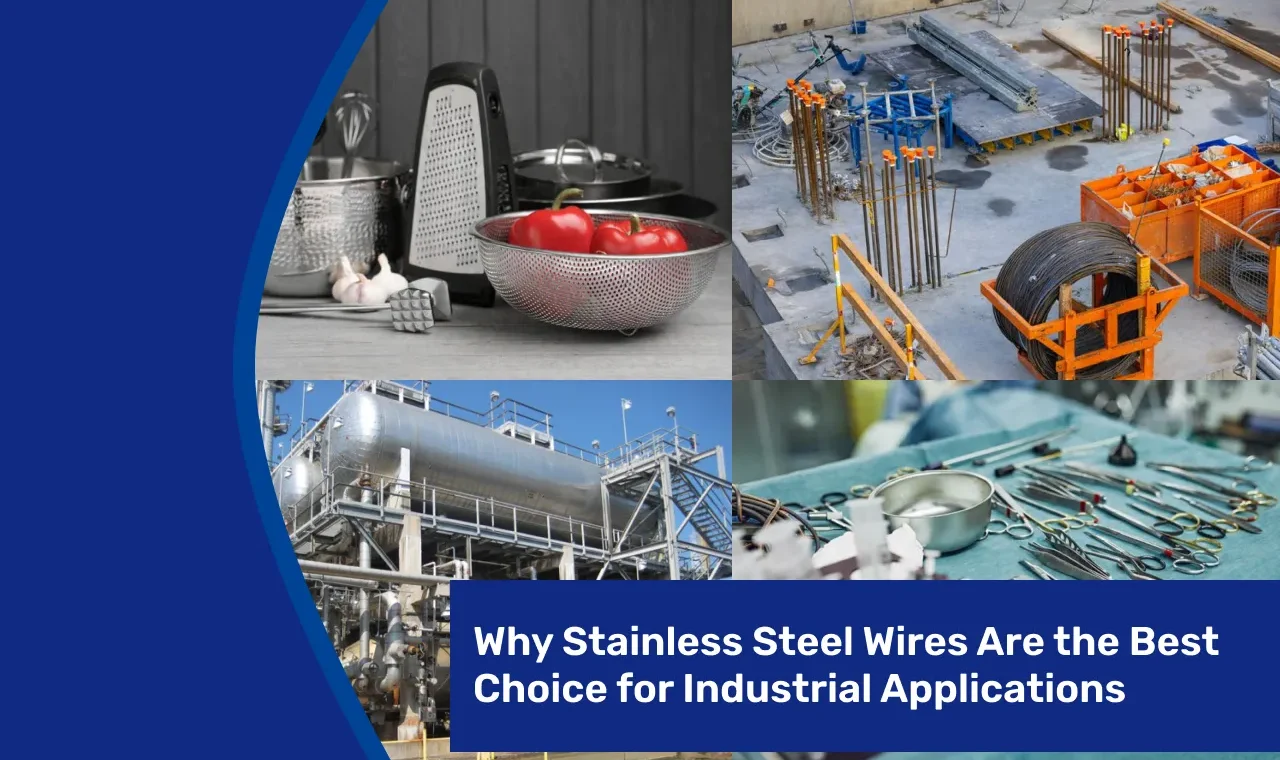
Due to their exceptional strength, corrosion resistance, and durability, stainless steel wires are widely used across multiple industrial sectors. Their ability to perform reliably in demanding environments makes them a preferred material for both heavy-duty and precision applications.
- Automotive & Engineering: Used in springs, fasteners, exhaust systems, and mechanical components that require high tensile strength and heat resistance.
- Construction & Infrastructure: Ideal for reinforcement, wire mesh, and structural components due to their durability and resistance to weather and corrosion.
- Electrical & Electronics: Commonly used for conductors, grounding wires, and cable armoring because of their reliability and long service life.
- Oil, Gas & Chemical Industries: Preferred for corrosion-resistant wiring, fastening, and support systems exposed to chemicals and harsh environments.
- Medical & Food Processing: Used in surgical tools, processing equipment, and clean-room applications thanks to their hygienic, non-reactive, and easy-to-clean surface.
With such versatility, stainless steel wires serve as a universal solution for a wide range of industrial applications, ensuring long-term performance, safety, and cost efficiency.
How to Choose the Right Stainless Steel Wire for Your Application
Selecting the right stainless steel wire is essential to ensure optimal performance, durability, and safety in industrial applications. The correct choice improves efficiency and extends product life.
Key factors to consider include:
- Stainless Steel Grade:
- Wire Diameter & Tensile Strength: Choose the wire size and strength based on load requirements, mechanical stress, and operational conditions.
- Surface Finish: Select bright, matte, annealed, or coated finishes depending on performance, appearance, and processing needs.
- Industry Standards & Compliance: Ensure the wire meets international quality standards such as ASTM, AISI, and EN for reliable and consistent performance.
Working with an experienced stainless steel wire manufacturer helps you select the right grade, size, and finish for long-term industrial success.
Why Stainless Steel Wires from a Trusted Manufacturer Matter
The performance and reliability of stainless steel wires depend not only on the material itself but also on manufacturing quality, process control, and consistency. Choosing a trusted manufacturer ensures long-term performance in demanding industrial applications.
A reliable manufacturer like Ratanakar ensures:
- Strict quality control and testing at every production stage to meet industrial performance standards
- Consistent mechanical and chemical properties, ensuring uniform strength and durability
- Customization as per industrial requirements, including grade, diameter, and surface finish
- Compliance with international standards such as ASTM, AISI, and EN
- Reliable bulk supply and timely delivery for domestic and export markets
For export-oriented and large-scale industrial projects, partnering with an experienced manufacturer like Ratanakar Wire Pvt. Ltd guarantees quality assurance, consistent supply, and long-term peace of mind.
Conclusion
Stainless steel wires have become the preferred choice for industrial applications due to their exceptional corrosion resistance, high strength, heat tolerance, versatility, and long-term cost efficiency. These qualities make them suitable for a wide range of demanding environments.
From heavy engineering and construction to precision medical and food-processing applications, stainless steel wires deliver reliable and consistent performance.
Selecting the right grade and sourcing from a trusted stainless steel wire manufacturer like Ratanakar ensures maximum durability, safety, and long-term value for every industrial project. For product details, bulk orders, or custom requirements, Request a stainless steel wire quotation and our team will assist you promptly.
FAQs
Q1. Why are stainless steel wires preferred for industrial applications?
Stainless steel wires are preferred due to their high corrosion resistance, superior strength, long durability, and reliable performance in harsh industrial environments.
Q2. Which stainless steel wire grade is best for corrosion resistance?
SS 316 is best for corrosion resistance as it contains molybdenum, making it ideal for marine, chemical, and highly corrosive environments.
Q3. Are stainless steel wires cost-effective?
Yes, stainless steel wires are cost-effective long term because they require low maintenance, offer long service life, and reduce replacement costs.
Q4. Can stainless steel wires withstand high temperatures?
Yes, stainless steel wires like SS 310 and SS 316 can withstand high temperatures while maintaining strength and structural stability.
Q5. What industries use stainless steel wires the most?
Stainless steel wires are widely used in automotive, construction, chemical, medical, electrical, and food processing industries.