TL;DR
- Best for welding: Use 308L or 316L stainless steel wire for strong, corrosion-resistant joints
- Best for construction: Choose 304 for general use and 316 for coastal or harsh environments
- Best for manufacturing: Select based on precision needs, including diameter, strength, and finish
- 304 vs 316: 316 offers higher corrosion resistance, while 304 is more cost-effective
- Buying tip: Always consider grade, environment, certifications, and supplier reliability for long-term value
Introduction
Choosing the right stainless steel wire is essential for ensuring performance, durability, and cost-efficiency, especially in demanding industries like welding, construction, and manufacturing. Understanding the different types of stainless steel wires and their uses can help you make better decisions based on your specific application needs. The right selection not only improves operational reliability but also minimizes long-term maintenance and replacement costs.
However, many buyers make costly mistakes by selecting the wrong grade, overlooking environmental conditions, or paying for specifications that don’t align with their actual requirements. These errors can lead to corrosion issues, structural failures, and reduced product lifespan.
This comprehensive guide will help you choose the best stainless steel wire based on your specific application, giving you the knowledge needed to make informed, cost-effective decisions and achieve long-term performance.
What is Stainless Steel Wire?
Stainless steel wire is a high-performance metal wire manufactured from steel alloys containing chromium (typically 10.5% or more), which forms a protective oxide layer that prevents rust and corrosion. This makes it an ideal choice for demanding industrial applications where durability and reliability are critical.
Used across industries like welding, construction, and manufacturing, stainless steel wire offers a combination of strength, corrosion resistance, and long service life, even in harsh environments.
Key Properties of Stainless Steel Wire
- High Corrosion Resistance: Performs well in moisture, chemicals, and marine environments
- Excellent Tensile Strength: Handles heavy loads and mechanical stress efficiently
- Heat & Chemical Resistance: Maintains stability in high-temperature and reactive conditions
- Long Lifespan: Requires minimal maintenance, reducing long-term operational costs
Common Forms Available
- Coils: Ideal for bulk industrial applications and continuous processing
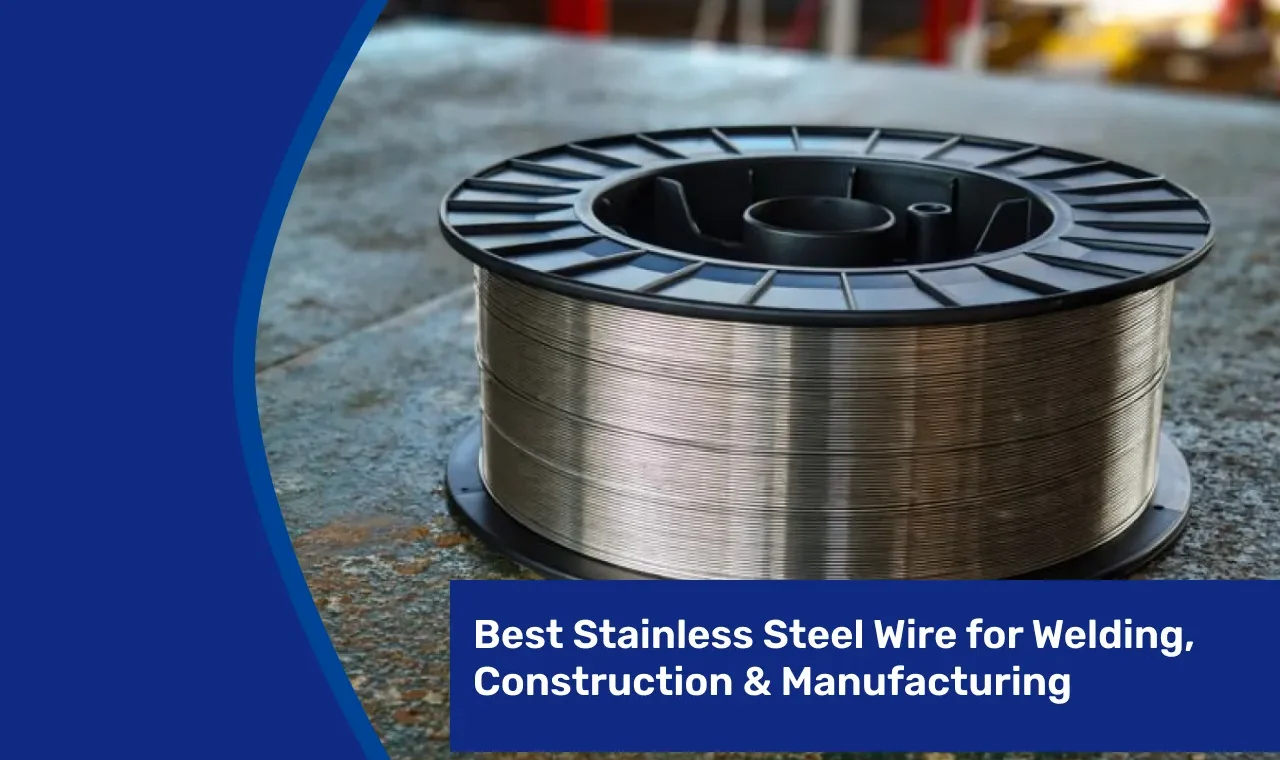
- Spools: Commonly used in welding and automated machinery
- Cut-to-Length Wires: Suitable for precision applications and specific project requirements
Stainless steel wire maintains corrosion resistance even when scratched, making it more durable than coated or carbon steel options.
Types of Stainless Steel Wire
Different types of stainless steel wire are designed for specific strength, corrosion resistance, and heat requirements, and understanding the popular grades of stainless steel wire helps ensure optimal performance and durability.
Stainless Steel Wire Types Comparison
Type | Strength | Corrosion Resistance | Best Applications |
Austenitic (304, 316) | Medium-High | Excellent | Welding, construction |
Ferritic | Medium | Moderate | Automotive, appliances |
Martensitic | High | Low | Cutting tools, springs |
Precipitation Hardening | Very High | High | Aerospace, precision engineering |
Most Commonly Used Type
Austenitic stainless steel wires (304 & 316) are the most widely used due to their excellent balance of strength, corrosion resistance, and versatility. They perform reliably in both indoor and outdoor environments, making them ideal for industrial and structural applications.
Austenitic wires are preferred for their consistent performance across environments, while ferritic and martensitic wires are used for specialized applications.
Stainless Steel Wire Grades Explained
Stainless steel wire is available in different grades, each designed for specific environments and performance requirements. Understanding the 304 vs 316 stainless steel differences is especially important when choosing the right grade to ensure better durability, corrosion resistance, and cost efficiency for your application.
304 Stainless Steel Wire
- Most widely used stainless steel grade
- Offers good corrosion resistance in general environments
- Cost-effective compared to higher alloy grades
Best for: Construction, fabrication, and general industrial applications
316 Stainless Steel Wire
- Contains molybdenum, improving resistance to corrosion and chemicals
- Performs well in marine and highly corrosive environments
Best for: Coastal areas, chemical processing, and marine applications
310 / 321 Stainless Steel Wire
- Designed for high-temperature stability and oxidation resistance
- Maintains strength under extreme heat conditions
Best for: Furnaces, heat exchangers, and other heat-intensive applications
In practical applications, 304 is suitable for most standard uses, but upgrading to 316 becomes essential in environments exposed to saltwater, chemicals, or extreme corrosion, preventing premature failure and maintenance costs.
Best Stainless Steel Wire for Welding
Choosing the right stainless steel wire for welding ensures strong, durable joints and prevents defects like cracking, porosity, and weak bonding. Understanding stainless steel welding wire types and applications can help you select the most suitable option for your specific welding needs.
For practical use, sourcing high-quality stainless steel welding wires from a reliable supplier ensures consistent performance, proper composition, and long-lasting welds.
Recommended Grades for Welding
- 308L Stainless Steel Wire: Commonly used for welding 304 stainless steel, offering good strength and corrosion resistance
- 316L Stainless Steel Wire: Ideal for welding in highly corrosive environments, especially where exposure to chemicals or moisture is high
MIG vs TIG Welding Wire
- MIG Welding Wire: Faster process, suitable for large-scale and industrial applications
- TIG Welding Wire: Provides cleaner, more precise welds, ideal for high-quality and detailed work
Using the correct stainless steel filler wire is essential to prevent cracking, maintain corrosion resistance, and ensure strong, durable weld joints.
Best Stainless Steel Wire for Construction
Construction applications require stainless steel wire that can withstand harsh conditions while maintaining strength, durability, and long-term structural integrity.
Best Grades for Construction
- 304 Stainless Steel Wire: Ideal for general construction projects, offering a strong balance of durability, corrosion resistance, and cost-effectiveness. Learn more about 304 Stainless Steel for industrial and construction applications.
- 316 Stainless Steel Wire: Recommended for coastal, humid, or chemically exposed environments due to its superior corrosion resistance. Explore the benefits of 316 Stainless Steel in harsh and marine environments.
Common Applications
- Reinforcement in concrete structures
- Binding wire for structural support
- Use in frameworks and load-bearing components
In construction, 316 stainless steel wire is preferred over 304 in coastal environments due to its superior resistance to saltwater corrosion and long-term durability.
Best Stainless Steel Wire for Manufacturing
Manufacturing applications require stainless steel wire that delivers high precision, flexibility, and consistent performance across production cycles. Selecting the right specifications is critical to ensure product quality, operational efficiency, and long-term reliability.
Common Applications
- Automotive components (springs, fasteners, cables)
- Medical devices requiring precision and hygiene standards
- Industrial machinery and equipment
Customization Options
- Diameter: Ranges from ultra-fine to thick wires based on application needs
- Tensile Strength: Determines load-bearing capacity and durability
- Surface Finish: Available in bright, matte, or coated finishes for specific performance and aesthetic requirements
Minor variations in wire diameter or tensile strength can affect performance and product quality, so consistent tolerances and certified materials are essential.
Key Factors to Consider Before Buying
Before purchasing stainless steel wire, it’s essential to evaluate key technical and quality factors to ensure optimal performance, durability, and cost-efficiency. Making the right choice helps avoid premature failure, unnecessary costs, and application issues.
Critical Buying Factors
- Grade Selection: Choose the appropriate grade (such as 304 or 316) based on environmental conditions and application requirements to ensure long-term reliability. For guidance, refer to our detailed guide on how to choose the right wire grade.
- Diameter & Tensile Strength: Select the correct diameter and strength to match load-bearing and mechanical performance needs
- Corrosion Resistance: Essential for applications exposed to moisture, chemicals, or marine environments to prevent rust and degradation
- Surface Finish: Impacts both performance and appearance, especially in precision or visible applications
- Certifications & Standards: Ensure the wire meets recognized standards such as ASTM A580, A313, and ISO certifications for consistent quality
In industrial procurement, overlooking factors like certification or tensile strength often leads to performance failures and increased maintenance costs. Experienced buyers always validate material standards and supplier credibility before making bulk purchases.
Stainless Steel Wire Price Guide
The price of stainless steel wire varies based on multiple technical and market-driven factors. Understanding these variables helps buyers make cost-effective decisions while ensuring quality and performance.
Key Price Drivers
- Grade: Higher alloy grades like 316 stainless steel wire are more expensive than 304 due to enhanced corrosion resistance and added elements like molybdenum
- Thickness & Diameter: Thicker wires and larger diameters require more raw material, increasing overall cost
- Quantity: Bulk orders typically offer lower per-unit pricing, making them ideal for industrial and B2B buyers
- Market Demand & Raw Material Prices: Fluctuations in nickel and chromium prices directly impact stainless steel wire costs
Evaluating price alongside quality, certifications, and supplier reliability helps avoid higher long-term costs from low-grade stainless steel wire.
Stainless Steel Wire vs Other Wires
Comparing stainless steel with galvanized and carbon steel helps determine the best option based on corrosion resistance, strength, cost, and long-term performance.
Comparison Table
Feature | Stainless Steel | Galvanized Wire | Carbon Steel |
Corrosion Resistance | Excellent | Moderate | Low |
Strength | High | Medium | High |
Cost | Higher | Lower | Lower |
Lifespan | Long | Medium | Short |
Stainless steel wire offers superior corrosion resistance and durability, making it ideal for long-term and harsh environment applications, while galvanized and carbon steel wires are more suitable for short-term or low-cost uses.
Common Mistakes to Avoid When Buying Stainless Steel Wire
When buying stainless steel wire, even small errors can lead to performance issues, increased costs, and reduced lifespan. Understanding common stainless steel wire buying mistakes helps ensure better decision-making and long-term reliability.
Avoid These Costly Mistakes
- Choosing the Wrong Grade: Selecting an unsuitable grade (e.g., using 304 instead of 316 in corrosive environments) can lead to premature rusting and failure
- Ignoring Environmental Conditions: Failing to consider exposure to moisture, chemicals, or saltwater can significantly reduce wire durability
- Focusing Only on Price, Not Quality: Lower-cost options may compromise on material quality, leading to higher maintenance and replacement costs
- Buying from Uncertified Suppliers: Lack of proper certifications (ASTM, ISO) can result in inconsistent quality and unreliable performance
In industrial projects, these mistakes often result in unexpected downtime, structural issues, and higher long-term expenses. Experienced buyers prioritize correct specifications and certified suppliers to ensure consistent performance and avoid costly rework.
How to Choose the Right Stainless Steel Wire Supplier
Choosing the right supplier ensures consistent quality, reliability, and stainless steel wire that meets industry standards for real-world performance. For buyers in India, our guide on how to choose stainless steel wire manufacturers in India provides additional insights into selecting trusted suppliers.
What to Look for in a Supplier
- Certifications (ISO & ASTM): Ensure the supplier complies with recognized standards like ASTM A580, A313, and ISO certifications for consistent quality
- Proven Industry Experience: Suppliers with years of experience understand application-specific requirements and offer better technical support
- Quality Testing Processes: Look for suppliers that conduct rigorous testing for tensile strength, composition, and durability
- Reliable Bulk Supply Capability: Essential for maintaining uninterrupted operations, especially in large-scale industrial projects
Working with certified, experienced suppliers ensures consistent quality, timely delivery, and reliable performance while avoiding costly project disruptions.
Conclusion
Choosing the best stainless steel wire depends on your application requirements, environmental conditions, and budget considerations. For welding, grades like 308L and 316L ensure strong and durable joints, while 304 and 316 are ideal for construction depending on exposure to moisture or corrosive environments. In manufacturing, selecting the right specifications such as diameter, tensile strength, and finish is essential for maintaining precision and product quality.
Investing in the right stainless steel wire not only enhances performance and durability but also reduces long-term maintenance costs and operational risks. If you’re unsure which option best fits your needs, you can contact our stainless steel wire experts for personalized solutions. Working with a reliable supplier further ensures consistent quality, timely delivery, and better overall return on investment.
FAQs
1. Which stainless steel wire is best for welding?
308L and 316L stainless steel wires are best for welding, as they provide strong joints, good corrosion resistance, and compatibility with common base metals like 304 and 316 stainless steel.
2. What is the difference between 304 and 316 stainless steel wire?
The main difference is corrosion resistance—316 contains molybdenum, making it more suitable for marine and chemical environments, while 304 is more affordable for general-purpose use.
3. Is stainless steel wire completely rust-proof?
Stainless steel wire is highly corrosion-resistant due to its chromium content, but it is not entirely rust-proof in extreme conditions such as prolonged exposure to saltwater or harsh chemicals.
4. Which stainless steel wire is best for construction applications?
304 stainless steel wire is ideal for general construction, while 316 is recommended for coastal, humid, or chemically exposed environments where higher corrosion resistance is required.
5. What factors affect the price of stainless steel wire?
Stainless steel wire prices depend on factors such as grade (304 vs 316), diameter, quantity, and fluctuations in raw materials like nickel and chromium.
6. How do I choose the right stainless steel wire for my application?
Selecting the right wire depends on your application, environment, and load requirements—choosing the correct grade, diameter, and finish ensures optimal performance and long-term durability.