Introduction
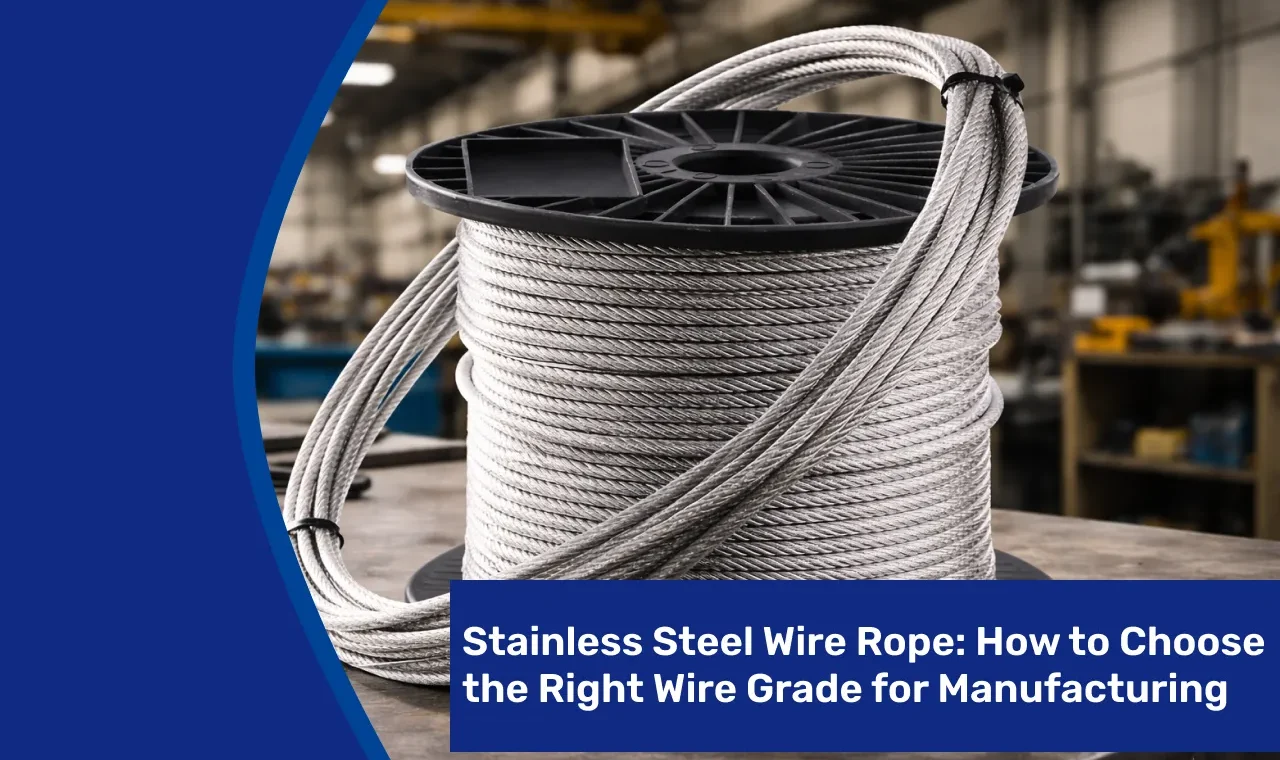
In the stainless steel wire rope industry, performance begins long before the rope is stranded and assembled. The true foundation lies in the quality and grade of stainless steel wire used during manufacturing.
While many buyers focus on finished rope specifications, experienced rope manufacturers understand that tensile strength, corrosion resistance, diameter consistency, and surface finish of the raw stainless steel wire directly impact final rope durability and load performance. The consistency and metallurgy of stainless steel wire determine how well the rope performs under load, stress, and environmental exposure.
If you are sourcing stainless steel wire rope material for manufacturing, choosing the correct wire grade is a critical technical decision.
Why Wire Grade Matters in Stainless Steel Wire Rope Manufacturing
The performance of stainless steel wire rope starts at the raw material level. Before stranding, twisting, or assembly begins, the quality of the stainless steel wire determines how the final rope will perform under load, stress, and environmental exposure.
The strength and service life of stainless steel wire rope depend heavily on four critical factors:
- Mechanical Properties: Tensile strength, yield strength, and elongation directly affect load-bearing capacity and fatigue resistance. Inconsistent mechanical properties can lead to uneven stress distribution within the rope structure.
- Chemical Composition: Precise alloy balance (such as chromium and molybdenum content in 304 or 316 grades) determines corrosion resistance and long-term durability, especially in marine and industrial environments.
- Surface Uniformity: A smooth, defect-free wire surface reduces internal friction during stranding and prevents micro-cracks that can weaken the rope over time.
- Workability During Drawing and Stranding: High-quality stainless steel wire must maintain structural integrity during cold drawing and rope manufacturing processes without cracking or work-hardening inconsistently.
Even small inconsistencies in raw stainless steel wire can reduce fatigue resistance, accelerate corrosion, or cause premature breakage in high-load applications.
For this reason, professional rope manufacturers prioritize sourcing from certified stainless steel wire suppliers who ensure controlled metallurgy, consistent diameter tolerance, and reliable batch quality rather than relying on generic stock material.
Common Stainless Steel Grades Used for Wire Rope
Selecting the correct stainless steel grade is critical in stainless steel wire rope manufacturing. The grade of stainless steel wire directly influences corrosion resistance, tensile strength, fatigue life, and long-term performance in different industrial environments.
Below are the two most commonly used grades for wire rope production:
304 Stainless Steel Wire
Best for: General industrial and structural applications
304 stainless steel wire is one of the most widely used materials in wire rope manufacturing due to its balanced mechanical strength and corrosion resistance.
Key Benefits:
- Good corrosion resistance in normal atmospheric conditions
- Strong mechanical properties for load-bearing applications
- Cost-effective compared to higher alloy grades
- Suitable for indoor, structural, and moderate environments
304 grade is ideal for stainless steel wire rope used in construction, architectural systems, and general industrial lifting where exposure to aggressive chemicals or saltwater is limited.
316 Stainless Steel Wire
Best for: Marine, coastal, and high-corrosion environments
316 stainless steel wire contains molybdenum, which significantly enhances corrosion resistance, especially against chlorides and saltwater exposure.
Key Benefits:
- Superior resistance to rust and pitting corrosion
- Molybdenum-enhanced alloy composition
- Excellent performance in marine and offshore applications
- Longer service life in chemically aggressive environments
When stainless steel wire rope is used in marine lifting systems, offshore platforms, coastal construction, or chemical processing industries, 316 grade stainless steel wire is the preferred choice for long-term durability and safety.
Mechanical Properties Rope Manufacturers Should Evaluate
In stainless steel wire rope manufacturing, selecting the right stainless steel wire requires careful evaluation of key mechanical properties. These factors directly affect rope strength, durability, and fatigue resistance.
- Tensile Strength: Tensile strength determines the load-bearing capacity of the wire. Consistent high tensile strength ensures structural integrity and reliable rope performance under stress.
- Diameter Tolerance: Precise diameter control is essential for smooth stranding and balanced rope construction. Even small variations can cause uneven stress distribution and reduce overall rope strength.
- Surface Finish: A smooth, defect-free surface minimizes internal abrasion during twisting and prevents early fatigue or corrosion failure.
- Work Hardening Behavior: The wire must maintain strength and flexibility during drawing and stranding without cracking or becoming brittle.
Careful evaluation of these properties ensures consistent stainless steel wire rope quality and long-term operational reliability.
304 vs 316 Stainless Steel Wire for Wire Rope
Choosing between 304 and 316 stainless steel wire is a critical decision in stainless steel wire rope manufacturing. The right grade depends on environmental exposure, performance requirements, and long-term durability expectations.
Feature | 304 Stainless Steel Wire | 316 Stainless Steel Wire |
Corrosion Resistance | Moderate | High |
Marine Use | Limited | Excellent |
Cost | More economical | Premium |
Chemical Exposure | Moderate resistance | Strong resistance |
Which Grade Should You Choose?
- For inland industrial applications with standard environmental exposure, 304 stainless steel wire is cost-effective and mechanically reliable.
- For marine, coastal, or chemically aggressive environments, 316 stainless steel wire provides superior corrosion resistance and longer service life.
Selecting the appropriate grade ensures better fatigue performance, reduced maintenance risk, and enhanced safety in stainless steel wire rope applications.
Why Rope Manufacturers Must Choose a Specialized Wire Manufacturer
In stainless steel wire rope manufacturing, selecting the right supplier goes far beyond price comparison. The quality of raw stainless steel wire directly influences rope strength, fatigue resistance, and long-term reliability.
A specialized stainless steel wire manufacturer should ensure:
- Certified chemical composition for corrosion resistance and structural stability
- Consistent batch quality to maintain uniform rope performance
- Controlled tensile properties for predictable load-bearing capacity
- Precision diameter tolerance for smooth and balanced stranding
- Export-compliant standards aligned with ASTM, EN, or ISO requirements
Consistency in raw stainless steel wire results in predictable rope strength, reduced failure risk, and improved fatigue life in demanding industrial applications.
Applications of Stainless Steel Wire Rope Material
High-quality stainless steel wire plays a critical role in the manufacturing of stainless steel wire rope used across demanding industrial sectors. The performance of the final rope depends heavily on the precision and consistency of the raw wire material.
Stainless steel wire is commonly used in rope production for:
- Marine lifting systems exposed to saltwater and high humidity
- Construction safety cables requiring high tensile strength and reliability
- Industrial hoisting applications handling heavy loads under repeated stress
- Architectural cable systems where durability and surface finish are essential
- Food processing environments requiring corrosion resistance and hygiene standards
Each of these applications demands precise mechanical properties, controlled chemical composition, and consistent surface quality at the wire level to ensure long-term performance and safety.
Final Thoughts
The performance of stainless steel wire rope begins with selecting the right wire grade. Whether you choose 304 for general industrial applications or 316 for high-corrosion environments, the quality of raw stainless steel wire directly influences rope durability, safety, and service life.
For rope manufacturers, partnering with a technically capable stainless steel wire supplier ensures long-term reliability, consistent production quality, and reduced operational risks.
If you are sourcing raw material for rope manufacturing, contact us for stainless steel wire for rope to discuss specifications, grades, and bulk supply requirements with our technical team.
Frequently Asked Questions (FAQs)
What grade of stainless steel wire is best for wire rope manufacturing?
The best grade depends on the application environment.
304 stainless steel wire is suitable for general industrial use, while 316 stainless steel wire is recommended for marine, coastal, or chemically aggressive environments due to its higher corrosion resistance.
Why is tensile strength important in stainless steel wire rope?
Tensile strength determines the load-bearing capacity of the rope. High and consistent tensile properties in stainless steel wire ensure better fatigue resistance, structural integrity, and long-term performance under heavy loads.
What is the difference between 304 and 316 stainless steel wire for rope production?
The main difference lies in corrosion resistance.
316 stainless steel wire contains molybdenum, which provides superior resistance to saltwater and chemical exposure, making it ideal for marine applications. 304 grade is more economical and suitable for standard industrial environments.
How does wire diameter tolerance affect stainless steel wire rope quality?
Precise diameter tolerance ensures balanced stranding and even load distribution within the rope. Variations in stainless steel wire diameter can cause uneven stress, reduced strength, and premature wear.
How do I choose the right stainless steel wire supplier for rope manufacturing?
Look for a manufacturer that provides certified chemical composition, controlled tensile properties, precision diameter tolerance, and compliance with international standards. Consistent stainless steel wire quality ensures predictable rope performance and longer service life.