Introduction
Stainless steel bright bars are not generic steel products. They are precision-engineered materials used in critical applications where dimensional accuracy, surface finish, and mechanical consistency directly affect performance. Yet, many buyers still treat bright bars as a commodity purchase focusing mainly on price rather than specifications.
The result? Machining problems, component rejection, corrosion failures, unexpected downtime, and long-term cost overruns.
This guide explains the 8 most common mistakes buyers make when purchasing stainless steel bright bars, why these mistakes happen, and how to avoid them. Whether you are sourcing for automotive parts, fasteners, shafts, valves, or industrial components, understanding these pitfalls will help you make technically sound and commercially safe decisions.
What Are Stainless Steel Bright Bars?
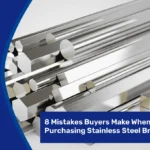
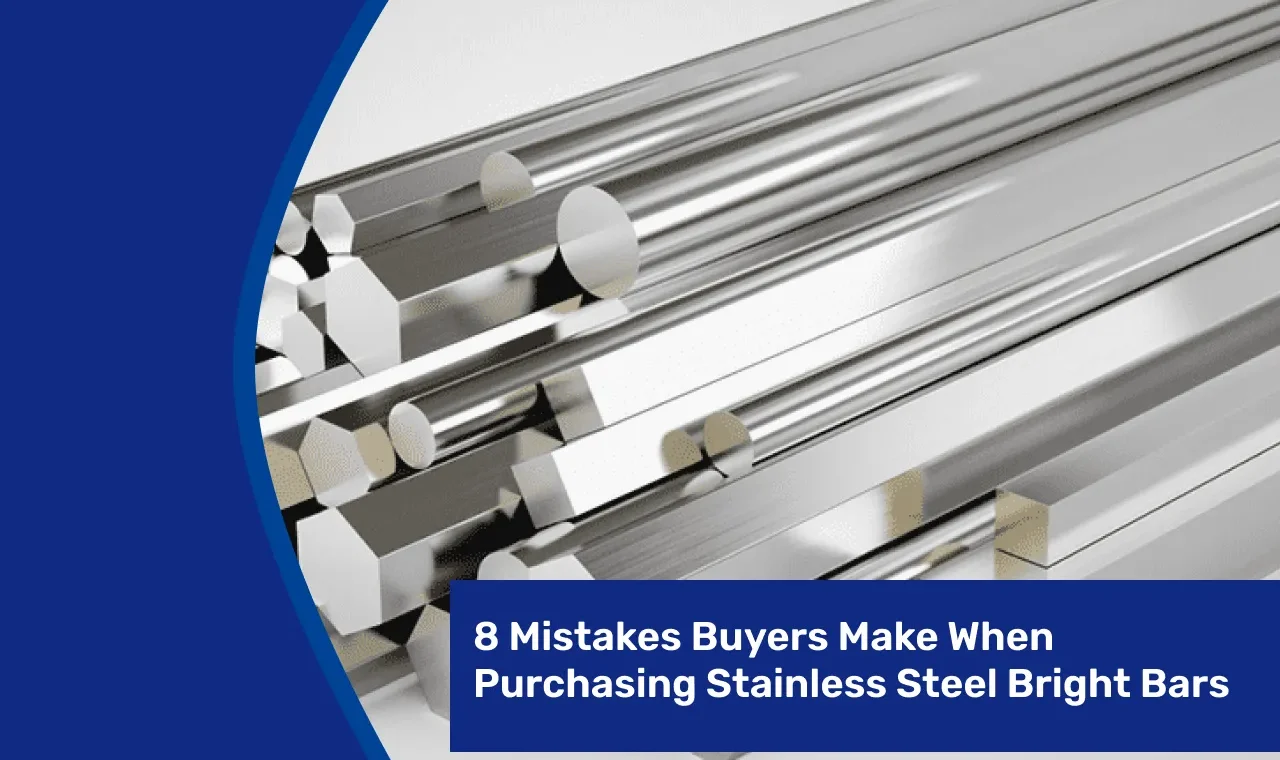
Stainless steel bright bars are precision-finished steel bars produced through cold drawing or peeling processes. Unlike hot-rolled (black) bars, these additional processes improve dimensional accuracy, surface finish, and straightness.
Bright bars offer:
- Tight diameter tolerances
- Smooth, bright surface finish
- Improved straightness
- Better machinability
Because of their precision and corrosion resistance, stainless steel bright bars are widely used in automotive components, fasteners, shafts, valves, and industrial machinery parts where accuracy and performance are critical.
Why Buying Stainless Steel Bright Bars Requires Technical Precision
Stainless steel bright bars are precision-engineered materials, not standard steel products. They are directly used in machining, assembly, and load-bearing components, where accuracy is critical.
Even a small deviation in grade, hardness, or diameter tolerance can result in:
- Excessive tool wear and machining inefficiency
- Assembly misalignment
- Premature corrosion or fatigue failure
- Higher rejection and scrap rates
Defining the correct specifications before purchase helps prevent production losses and ensures consistent performance.
Common Mistakes Buyers Make When Purchasing Stainless Steel Bright Bars
Selecting the wrong grade is one of the most common mistakes when purchasing stainless steel bright bars. Proper stainless steel bright bars grade selection is critical because each grade differs in corrosion resistance, strength, and suitability for specific environments.
1. Choosing the Wrong Stainless Steel Grade
Selecting the wrong grade is one of the most common mistakes when purchasing stainless steel bright bars. Each grade differs in corrosion resistance, strength, and suitability for specific environments.
Common Grade Confusion
- 304 Stainless Steel Bright Bars – Good general corrosion resistance but not ideal for chloride or marine exposure.
- 316 Stainless Steel Bright Bars – Better corrosion resistance, suitable for marine and chemical environments.
- 410 / 420 Stainless Steel Bright Bars – Higher strength and hardness, but lower corrosion resistance.
Why This Is a Problem
Choosing a grade based only on price or availability can cause:
- Corrosion failure
- Insufficient strength
- Unnecessary material cost
Solution: Always define environmental conditions, mechanical load, and machining requirements before finalizing the grade.
2. Ignoring Dimensional Tolerance Requirements
Stainless steel bright bars are chosen for their tight dimensional tolerances, yet many buyers fail to clearly specify required tolerance standards.
Common Issues
- Assuming “standard tolerance” without confirmation
- Not specifying H8, H9, or custom tolerances
- Accepting excessive diameter variation
Impact on Production
- Poor assembly fitment
- Increased machining time
- Higher material removal
- Component rejection
Solution: Clearly define diameter tolerance and straightness requirements according to your machining and assembly specifications.
3. Overlooking Surface Finish Specifications
Not all stainless steel bright bars offer the same surface quality. Many buyers assume that a “bright” finish is suitable for every application, which is not always true.
Why Surface Finish Matters
- Affects machinability and tool life
- Impacts coating, plating, and polishing results
- Influences friction and wear in rotating parts
Common Mistake
Not specifying required surface roughness or finish type (cold drawn, peeled, or polished).
Solution: Clearly define surface finish requirements, especially for precision machining or aesthetic applications.
4. Buying Based Only on the Lowest Price
Choosing stainless steel bright bars based only on price can lead to higher long-term costs. Lower-priced material often compromises consistency, tolerance accuracy, or surface quality.
Hidden Costs of Cheap Bright Bars
- High rejection rates
- CNC tool damage
- Production delays
- Inconsistent batch quality
A slightly cheaper bright bar that causes rework or downtime can cost far more than a technically reliable product.
Solution: Evaluate the total cost of ownership including quality, machining efficiency, and long-term performance not just the per-kg price.
5. Not Verifying Mechanical and Chemical Test Certificates
Many buyers fail to properly review the Mill Test Certificate (MTC) when purchasing stainless steel bright bars. This document confirms whether the material meets required standards and specifications.
What Should Be Checked
- Chemical composition compliance
- Tensile and yield strength
- Elongation and hardness values
- Heat treatment condition
Why This Matters
Using material without verified test reports can result in:
- Audit failures
- Export rejection
- Inconsistent product performance
Solution: Always request and verify MTCs according to relevant standards such as ASTM, EN, DIN, or JIS before approving the material.
6. Ignoring Heat Treatment and Material Condition
Stainless steel bright bars are available in different conditions, such as annealed, hardened, or stress-relieved. Each condition directly affects machinability, strength, and performance.
Common Buyer Error
Ordering material without clearly specifying the required condition, assuming it will suit the intended application.
Possible Consequences
- Poor machinability
- Excessive tool wear
- Insufficient strength or ductility
Solution: Always confirm the required heat treatment and material condition based on the end-use application and machining requirements.
7. Selecting a Supplier Without Verifying Manufacturing Capability
Not all stainless steel bright bar suppliers have the same production standards or quality control systems. Choosing a supplier without verifying their capabilities can lead to long-term risks.
What Buyers Often Overlook
- In-house cold drawing or peeling facilities
- Proper testing and inspection infrastructure
- Batch-to-batch process consistency
- Experience in export or critical industries
Potential Risk
- Inconsistent material quality
- Delayed deliveries
- Limited technical support
Solution: Partner with a stainless steel bright bar manufacturer that has proven production capability, quality assurance systems, and technical expertise not just a trading background.
8. Neglecting Packaging, Handling, and Logistics
Packaging and handling are often overlooked when purchasing stainless steel bright bars, especially for domestic orders. However, improper protection can damage surface finish and dimensional accuracy during transit.
Why This Is Risky
- Surface scratches or impact damage
- Corrosion due to inadequate rust protection
- Bent or misaligned bars
Export-Specific Risks
- Rust formation during long transit
- Customs rejection due to improper packing
- Increased claims and delivery delays
Solution: Clearly specify rust prevention methods, protective wrapping, and export-grade packaging to ensure material integrity during transport.
Key Specifications to Confirm Before Placing an Order
Before purchasing stainless steel bright bars, clearly define all technical and commercial requirements to avoid production issues and costly errors.
Ensure the following specifications are confirmed:
- Stainless steel grade (304, 316, 410, etc.)
- Diameter and length
- Required dimensional tolerance (H8, H9, or custom)
- Surface finish (cold drawn, peeled, polished)
- Heat treatment condition (annealed, hardened, stress-relieved)
- Mechanical and chemical test certification (MTC)
- Order quantity and delivery timeline
- Packaging and logistics requirements
A well-defined specification checklist helps ensure consistent quality, smoother machining, and reliable performance.
Industry Applications That Demand Precision Bright Bars
Stainless steel bright bars are used in industries where dimensional accuracy, strength, and corrosion resistance are critical.
Common applications include:
- Automotive shafts and precision components
- Fasteners, bolts, and threaded parts
- Valves and pump components
- Oil and gas equipment
- Engineering and fabrication parts
You can explore broader industrial applications of stainless steel products to understand how specification requirements vary across industries.
Each application has specific performance and tolerance requirements, which must be clearly defined in the material specifications to ensure reliable and long-term operation.
How to Choose the Right Stainless Steel Bright Bars Supplier
Selecting the right stainless steel bright bars supplier is just as important as choosing the correct grade and specifications. A reliable supplier ensures consistent quality, compliance, and long-term performance.
A trusted supplier should provide:
- Technical guidance on grade and specification selection
- Consistent batch-to-batch quality
- Compliance with international standards (ASTM, EN, DIN, JIS)
- Transparent test certificates and documentation
- Experience serving industrial and export markets
Partnering with a technically capable manufacturer helps reduce risk, improve production efficiency, and ensure dependable material supply.
Conclusion
Stainless steel bright bars should never be treated as commodity steel products. They are precision engineering materials that must match your application, machining process, and performance requirements.
Most production problems arise from incomplete specifications not manufacturing defects. By selecting the correct grade, defining tolerances, confirming surface finish, verifying certifications, and choosing the right supplier, you can reduce rejection rates, downtime, and long-term costs.
If your requirements are complex or technically demanding, it is advisable to request a quote for stainless steel bright bars with proper technical consultation. Partnering with an experienced manufacturer ensures consistent quality, reliable supply, and long-term performance.
Frequently Asked Questions (FAQs)
1. What is the difference between stainless steel bright bars and black bars?
Stainless steel bright bars are cold drawn or peeled to achieve tighter tolerances, smoother surface finish, and improved straightness. Black bars are hot rolled and have rougher surfaces with wider dimensional variation.
2. Which grade is best for stainless steel bright bars?
The best grade depends on the application.
304 is suitable for general use, 316 offers better corrosion resistance in marine or chemical environments, and 410/420 provide higher strength but lower corrosion resistance.
3. What tolerance standards apply to stainless steel bright bars?
Common tolerance standards include H8, H9, and custom precision tolerances. The required tolerance depends on machining accuracy and assembly fitment requirements.
4. What documents should be verified before purchasing stainless steel bright bars?
Buyers should verify the Mill Test Certificate (MTC), including chemical composition, tensile strength, yield strength, hardness values, and heat treatment condition as per ASTM, EN, DIN, or JIS standards.
5. What affects the price of stainless steel bright bars?
Price depends on grade selection, diameter, tolerance level, surface finish, heat treatment condition, quantity, and market fluctuations in raw material costs.
6. Are stainless steel bright bars suitable for CNC machining?
Yes. Due to their tight dimensional tolerances and smooth surface finish, stainless steel bright bars are ideal for CNC machining and precision component manufacturing.
7. How do I choose the right stainless steel bright bar supplier?
Select a supplier with in-house manufacturing capability, quality testing infrastructure, international standard compliance, consistent batch quality, and experience in industrial or export markets.