Introduction
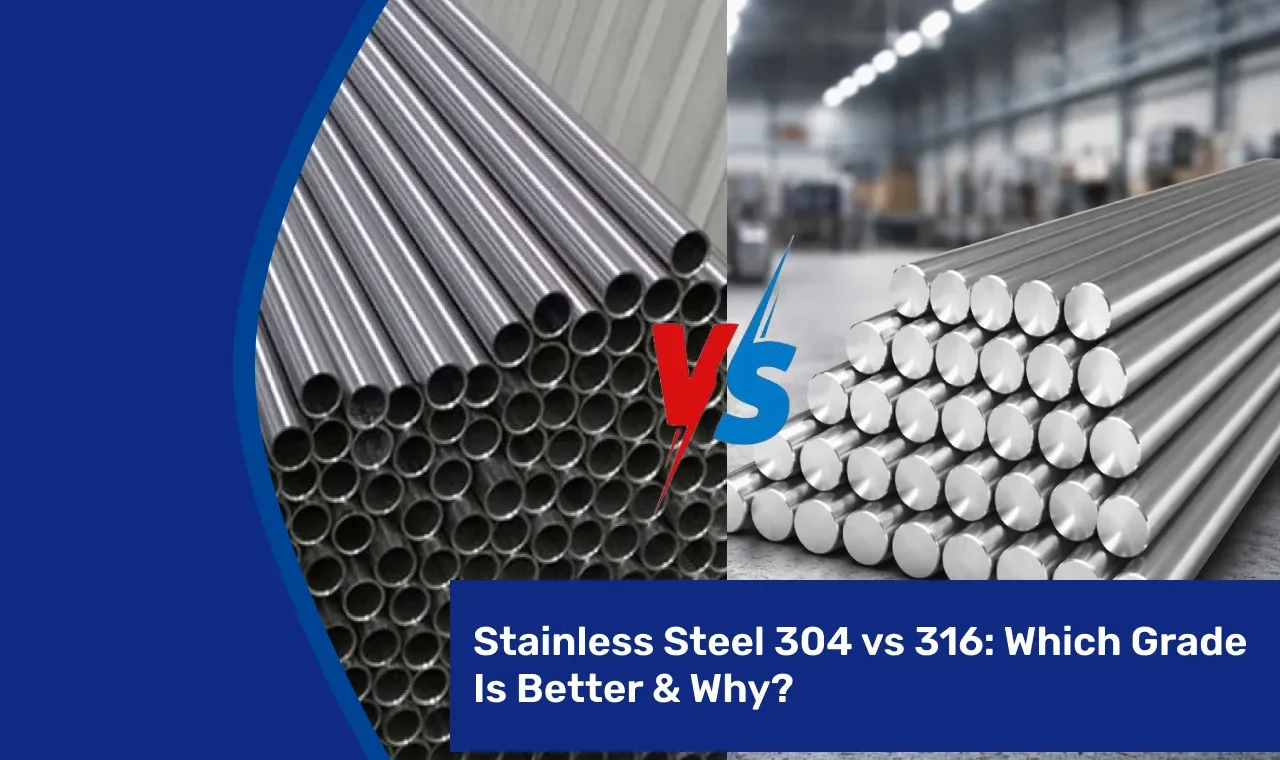
Choosing the right stainless steel grade is essential for achieving the best performance, durability, and long-term cost efficiency. Among the many available options, Stainless Steel 304 and 316 are the most widely used and frequently compared across industries, especially in applications involving stainless steel wires and precision components.
Although both grades belong to the austenitic stainless steel family, they are designed for different operating conditions. Their performance can vary significantly based on factors such as environment, corrosion exposure, and application demands.
This guide offers a clear and practical comparison of Stainless Steel 304 vs 316, helping manufacturers, engineers, and procurement professionals confidently determine which grade is better and why for their specific requirements.
Stainless Steel 304 vs 316: Chemical Composition Comparison
The main difference between Stainless Steel 304 and 316 lies in their chemical composition, which directly impacts corrosion resistance, durability, and overall performance in different environments.
Chemical Composition Comparison
Element | SS 304 | SS 316 |
Chromium | ~18% | 16–18% |
Nickel | ~8% | 10–14% |
Molybdenum | Not present | 2–3% |
Corrosion Resistance | Good | Excellent |
Cost | Lower | Higher |
Why Molybdenum Matters
The key advantage of Stainless Steel 316 is the addition of molybdenum, an alloying element that significantly enhances resistance to corrosion. This makes SS 316 more suitable for demanding environments.
Molybdenum improves resistance to:
- Chlorides and saltwater exposure
- Chemical and acidic environments
- Pitting and crevice corrosion
- Long-term moisture and harsh operating conditions
Because of this single element, Stainless Steel 316 consistently outperforms 304 in marine, chemical, and high-corrosion applications, even though it comes at a higher initial cost.
Mechanical Properties: 304 vs 316 Stainless Steel
When it comes to mechanical strength, Stainless Steel 304 and 316 perform almost identically. This means that strength is not the deciding factor when choosing between these two grades. Instead, the selection is primarily influenced by environmental conditions and corrosion exposure.
Mechanical Properties Comparison
Property | SS 304 | SS 316 |
Tensile Strength | ~515 MPa | ~515 MPa |
Yield Strength | ~205 MPa | ~205 MPa |
Elongation | Excellent | Excellent |
Weldability | Very Good | Very Good |
Machinability | Good | Slightly Lower |
Key Insight
There is no significant strength advantage between Stainless Steel 304 and 316. Both grades offer excellent durability, formability, and weldability.
- The real difference lies in corrosion resistance, not load-bearing capacity.
- If the application involves harsh or corrosive environments, 316 is the better choice.
- For general-purpose and cost-sensitive applications, 304 delivers reliable performance.
Corrosion Resistance: Which Stainless Steel Performs Better?
Corrosion resistance is one of the most important factors when choosing between Stainless Steel 304 and 316. While both grades offer good protection against corrosion, their performance differs significantly depending on the environment and exposure conditions.
Stainless Steel 304
- Best suited for dry, indoor, and low-corrosion environments
- Offers good resistance to oxidation and mild chemicals
- May corrode when exposed to chloride-rich or salty conditions, especially over time
Stainless Steel 316
- Provides excellent resistance to chlorides and saltwater
- Performs reliably in chemical, marine, and coastal environments
- Ideal for continuous exposure to moisture, chemicals, and harsh elements
Verdict
- Stainless Steel 316 clearly outperforms 304 in corrosive environments due to its enhanced chemical composition.
- Stainless Steel 304 remains a strong and cost-effective choice for standard, non-aggressive conditions.
Applications Comparison: Where Each Grade Works Best
Choosing the right stainless steel grade depends largely on where and how it will be used. Below is a clear comparison showing which applications are best suited for Stainless Steel 304 and 316.
Best Applications for Stainless Steel 304
- General industrial manufacturing and fabrication
- Indoor equipment and structural components
- Kitchenware and food-contact equipment in controlled environments
- Stainless steel wires, rods, and fasteners
- Cost-sensitive projects where corrosion exposure is minimal
Why choose SS 304?
It offers an excellent balance of performance, versatility, and affordability, making it ideal for everyday industrial use.
Best Applications for Stainless Steel 316
- Marine and offshore components exposed to saltwater
- Chemical and pharmaceutical industries with aggressive media
- Food and beverage processing plants requiring high hygiene standards
- Medical and sanitary environments
- Outdoor installations in harsh or aggressive climates
Why choose SS 316?
Its superior corrosion resistance ensures longer service life and lower maintenance, even in demanding conditions.
Price Comparison: 304 vs 316 Stainless Steel
Cost is often a key deciding factor when choosing between Stainless Steel 304 and 316. While both grades are widely available, 316 stainless steel is consistently priced higher than 304 and for good reason.
Why Is Stainless Steel 316 More Expensive Than 304?
The higher cost of SS 316 is due to:
- Higher nickel content, which improves strength and corrosion resistance
- Addition of molybdenum, enhancing performance in harsh environments
- Increased alloying and processing costs during manufacturing
Price Difference Explained
- Stainless Steel 316 typically costs 20–30% more than Stainless Steel 304
- However, SS 316 delivers a longer service life and lower maintenance costs, especially in corrosive conditions
Cost vs Value Insight
- SS 304 is ideal for budget-sensitive and general-purpose applications
- SS 316 offers better long-term value when corrosion resistance and durability are critical
Paying more upfront for 316 often results in reduced downtime, fewer replacements, and lower total ownership costs.
304 vs 316 Stainless Steel for Welding & Manufacturing
Both Stainless Steel 304 and 316 are widely used in fabrication and manufacturing due to their excellent mechanical properties and reliability. However, there are some practical differences that can influence material selection during production.
Welding Performance
- Both grades offer excellent weldability
- Compatible with TIG, MIG, and resistance welding processes
- Proper filler material selection is essential to maintain corrosion resistance and joint strength
Manufacturing Considerations
- Stainless Steel 304: Easier to machine with lower tooling wear, making it suitable for high-volume production
- Stainless Steel 316: Slightly tougher to machine due to molybdenum content, but delivers superior performance in corrosive environments
Industry Preference
- High-volume, cost-efficient production → Stainless Steel 304
- Critical, performance-driven components → Stainless Steel 316
Key takeaway:
Choose SS 304 for efficiency and affordability, and SS 316 when manufacturing components that must withstand harsh conditions and long-term exposure.
Which Stainless Steel Grade Is Better & Why?
Choosing between Stainless Steel 304 and 316 depends on how and where the material will be used. Below is a simple decision guide to help you select the right grade with confidence.
Choose Stainless Steel 304 If:
- The environment is indoor or only mildly corrosive
- Cost efficiency is a key priority
- The application is general-purpose
- Large-scale or high-volume production is required
Choose Stainless Steel 316 If:
- The material will be exposed to saltwater, chemicals, or continuous moisture
- Long-term durability and reliability are critical
- The application involves food processing, pharmaceuticals, or marine use
- Maintenance, downtime, and failure costs must be minimized
Final Verdict
- Stainless Steel 304 is the better choice for affordable, general applications
- Stainless Steel 316 is the superior option for corrosion resistance and harsh environments
There is no universally “better” grade, only the right stainless steel grade for the right application.
Conclusion
Choosing the right stainless steel grade 304 or 316 largely depends on the environment, exposure conditions, and total lifecycle cost. Stainless Steel 304 is ideal for cost-effective, general-purpose applications, providing reliable performance in standard indoor or low-corrosion environments.
On the other hand, Stainless Steel 316 is the preferred choice for corrosive, marine, chemical, or high-moisture settings, offering superior durability and long-term reliability. Businesses evaluating these options can contact us for stainless steel wire requirements to discuss specifications, quantities, and application needs while selecting the appropriate grade to ensure better performance, reduced maintenance, and extended service life, helping make smarter and more cost-efficient material decisions.
FAQs:
1. Is 316 stainless steel stronger than 304?
Both 304 and 316 have similar mechanical strength. The key difference is corrosion resistance, with 316 offering superior protection in harsh or marine environments, not higher tensile strength.
2. Can stainless steel 304 rust?
Yes, 304 stainless steel can rust when exposed to salt, chlorides, or harsh chemicals. It performs well indoors or in low-corrosion conditions but may corrode over time in aggressive environments.
3. Is 316 stainless steel food-grade?
Yes, 316 stainless steel is food-grade and widely used in food processing, pharmaceuticals, and hygienic applications because it resists corrosion, moisture, and chemical exposure effectively.
4. Which grade is better for outdoor use?
Stainless Steel 316 is the preferred choice for outdoor and marine applications. Its superior corrosion resistance makes it ideal for exposure to saltwater, coastal climates, and harsh environmental conditions.
5. Why is 316 more expensive than 304?
316 stainless steel costs more due to higher nickel content, the addition of molybdenum, and increased processing requirements. This makes it more corrosion-resistant and durable, justifying the higher price.
6. When should I choose 304 over 316?
Choose 304 for indoor, low-corrosion, or cost-sensitive projects. It performs reliably in general-purpose applications where exposure to harsh chemicals or saltwater is minimal, offering good value.
7. Does 316 stainless steel require less maintenance?
Yes, 316 requires minimal maintenance in harsh or corrosive environments due to its superior corrosion resistance, long service life, and ability to withstand chemicals, moisture, and outdoor conditions.