Introduction
Stainless steel spring wire is a high-strength wire material widely used to manufacture springs and flexible mechanical components. With excellent corrosion resistance, high tensile strength, and long fatigue life, it plays an important role in industries such as automotive, industrial equipment, electronics, aerospace, and medical devices. It is also part of a broader range of stainless steel wires used in industrial manufacturing, designed for durability and reliable performance.
Springs are essential components in many mechanical systems as they store energy, maintain pressure between parts, and absorb shocks and vibrations. To ensure consistent performance in demanding environments, manufacturers rely on high-quality stainless steel spring wire.
This article covers the properties, manufacturing process, grades, advantages, and industrial applications of stainless steel spring wire to help engineers and manufacturers select the right material for long-lasting performance.
What Is Stainless Steel Spring Wire?
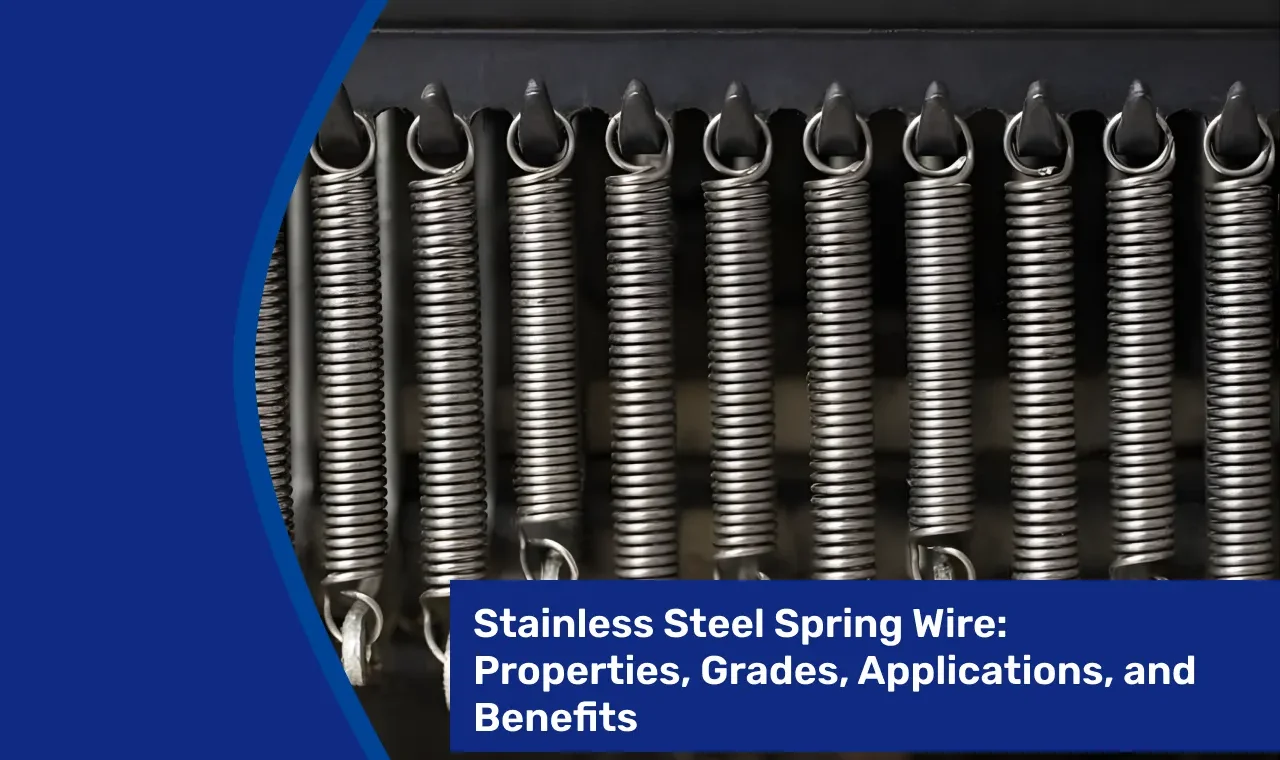
Stainless steel spring wire is a specialized stainless steel wire designed specifically for manufacturing springs such as compression springs, extension springs, and torsion springs. The wire is produced through precision drawing processes that increase its tensile strength and elasticity.
Unlike standard stainless steel wire, spring wire is engineered to withstand repeated deformation while maintaining its original shape. This property makes it ideal for components that require continuous movement, tension, or load support.
The most important characteristics of stainless steel spring wire include:
- High tensile strength
- Excellent elasticity
- Superior fatigue resistance
- Strong corrosion resistance
- Long service life
These features make stainless spring wire one of the most reliable materials used in precision spring manufacturing. Industries that require high-performance springs often rely on stainless steel spring wires for industrial applications to ensure durability and consistent performance.
Manufacturing Process of Stainless Steel Spring Wire
The quality and performance of stainless steel spring wire depend heavily on the manufacturing process. Reputable manufacturers follow strict procedures to ensure consistent mechanical properties and dimensional accuracy.
Raw Material Selection
The process begins with high-quality stainless steel rods that contain specific alloy compositions such as chromium, nickel, and molybdenum. These elements provide corrosion resistance and mechanical strength.
Wire Drawing
The rods are drawn through a series of dies to gradually reduce the diameter of the wire. This cold drawing process improves tensile strength and enhances the wire’s mechanical performance.
Heat Treatment
Heat treatment is performed to control hardness, elasticity, and stress distribution. This step ensures that the wire can withstand repeated compression and extension.
Surface Finishing
Surface finishing processes such as polishing, pickling, or coating improve corrosion resistance and enhance the appearance of the wire.
Quality Testing
Manufacturers conduct rigorous testing to ensure that the stainless steel spring wire meets international quality standards. Testing includes:
- Tensile strength testing
- Fatigue testing
- Dimensional inspection
- Surface quality checks
Key Properties of Stainless Steel Spring Wire
The widespread use of stainless steel spring wire is largely due to its excellent combination of mechanical strength and corrosion-resistant alloy composition. These properties allow springs to perform reliably under repeated stress and challenging environmental conditions.
Mechanical Properties
- High Tensile Strength: Stainless steel spring wire offers high tensile strength, allowing springs to withstand heavy loads and continuous mechanical stress without permanent deformation.
- Elasticity: Elasticity is a critical property of spring materials. Stainless steel spring wire allows springs to return to their original shape after compression or extension, ensuring consistent performance.
- Fatigue Resistance: Springs often operate under thousands or even millions of cycles. Stainless steel spring wire provides excellent fatigue resistance, which helps maintain durability and long service life.
Chemical Composition
The corrosion resistance and durability of stainless steel spring wire come from its alloy composition. Key elements include:
- Chromium – Provides corrosion resistance and protects against oxidation
- Nickel – Enhances toughness and flexibility
- Carbon – Increases hardness and tensile strength
- Molybdenum – Improves resistance to chemicals and marine environments
Different combinations of these elements create various stainless steel grades used for spring wire manufacturing, allowing manufacturers to select the most suitable material for specific industrial applications.
Popular Grades of Stainless Steel Spring Wire
Several stainless steel grades are commonly used for manufacturing springs, each offering different levels of strength, corrosion resistance, and performance depending on the application requirements.
302 Stainless Steel Spring Wire
302 stainless steel spring wire is one of the most widely used grades for industrial spring manufacturing due to its excellent balance of strength and corrosion resistance.
Features
- High tensile strength
- Good corrosion resistance
- Excellent elasticity
Applications
- Automotive springs
- Industrial springs
- Mechanical components
304 Stainless Steel Spring Wire
304 stainless steel spring wire is known for its versatility and strong corrosion resistance, making it suitable for a wide range of industrial and consumer applications.
Features
- Strong corrosion resistance
- Good formability and mechanical strength
- Suitable for various environments
Applications
- Consumer products
- Food processing equipment
- Medical devices
316 Stainless Steel Spring Wire
316 stainless steel spring wire contains molybdenum, which significantly improves resistance to corrosion, especially in marine and chemical environments.
Features
- Excellent resistance to saltwater and chemicals
- High durability in harsh environments
- Strong mechanical performance
Applications
- Marine equipment
- Chemical processing industries
- Food processing machinery
17-7 PH Stainless Steel Spring Wire
17-7 PH stainless steel spring wire is a precipitation-hardening stainless steel grade known for its extremely high strength and fatigue resistance.
Features
- Exceptional tensile strength
- Excellent fatigue resistance
- Good corrosion resistance
Applications
- Aerospace components
- Precision engineering equipment
- High-performance springs
These grades of stainless steel spring wire are widely used across industries where durability, corrosion resistance, and reliable spring performance are essential. Many manufacturers also explore Popular grades of stainless steel to select the most suitable material for their requirements.
Advantages of Stainless Steel Spring Wire
Using stainless steel spring wire provides several advantages compared with other spring materials, making it a preferred choice for many industrial and engineering applications.
Corrosion Resistance
One of the most important benefits of stainless steel spring wire is its excellent corrosion resistance. The chromium in stainless steel forms a protective oxide layer on the surface, preventing rust and making it suitable for humid, marine, and chemical environments.
High Durability
Springs manufactured from stainless steel spring wire offer long-lasting durability and maintain their structural integrity even under repeated mechanical stress and heavy loads.
Fatigue Resistance
Stainless steel spring wire provides excellent fatigue resistance, allowing springs to withstand continuous compression, tension, and torsion cycles without losing their performance.
Temperature Resistance
Another key advantage is its ability to maintain strength and elasticity across a wide temperature range, making it suitable for both high-temperature and low-temperature industrial applications.
Low Maintenance
Due to its corrosion resistance and long service life, stainless steel spring wire requires minimal maintenance, which helps reduce operational costs and improves reliability in demanding environments.
Industrial Applications of Stainless Steel Spring Wire
Because of its high strength, corrosion resistance, and durability, stainless steel spring wire is widely used in many industries that require reliable spring components and mechanical performance.
Automotive Industry
The automotive industry uses stainless steel spring wire to manufacture springs that withstand continuous stress and vibration.
Common applications include:
- Suspension springs
- Valve springs
- Seat adjustment springs
Industrial Machinery
Industrial equipment requires durable springs for motion control and mechanical support. In addition to spring manufacturing, many industrial fabrication processes also rely on stainless steel welding wire for joining and assembling metal components.
Examples include:
- Compression springs
- Tension springs
- Mechanical actuators
Electronics Industry
Small precision springs made from stainless steel spring wire are essential for electronic devices.
Applications include:
- Battery contacts
- Electrical connectors
- Micro springs
Medical Industry
Medical equipment requires materials with high strength and corrosion resistance.
Uses include:
- Surgical instruments
- Medical devices
- Precision spring components
Consumer Products
Many everyday products contain spring mechanisms made from stainless steel spring wire.
Examples include:
- Household appliances
- Locks and mechanical tools
- Hardware components
This wide range of applications highlights the importance of stainless steel spring wire in modern industrial manufacturing and precision engineering.
Stainless Steel Spring Wire vs Carbon Spring Wire
Feature | Stainless Steel Spring Wire | Carbon Spring Wire |
Corrosion Resistance | Excellent corrosion resistance | Low corrosion resistance |
Durability | Very high durability | Moderate durability |
Maintenance | Low maintenance required | Higher maintenance needed |
Cost | Higher initial cost | Lower cost |
Industrial Applications | Marine, medical, food processing industries | General mechanical applications |
Although carbon spring wire may be less expensive, stainless steel spring wire provides superior corrosion resistance and durability, making it a preferred choice for demanding environments.
Factors to Consider When Choosing Stainless Steel Spring Wire
Selecting the right stainless steel spring wire is essential to ensure reliable performance, durability, and safety in spring manufacturing. Several factors should be evaluated before choosing the appropriate wire for a specific application.
Tensile Strength Requirements
The wire must provide sufficient tensile strength to support the required load and withstand continuous mechanical stress without permanent deformation.
Environmental Conditions
It is important to consider environmental factors such as exposure to moisture, chemicals, or high temperatures, which can affect the longevity and performance of the spring.
Wire Diameter
The diameter of the stainless steel spring wire directly impacts the strength, flexibility, and overall performance of the spring in mechanical applications.
Corrosion Resistance
Industries such as marine, food processing, pharmaceuticals, and chemical processing require spring wire with excellent corrosion resistance to ensure long-term durability.
Industry Standards
Always ensure the stainless steel spring wire meets recognized industry standards such as ASTM and ISO, which guarantee quality, safety, and consistent performance.
Quality Standards for Stainless Steel Spring Wire
Reliable manufacturers follow strict quality standards and testing procedures to ensure that stainless steel spring wire delivers consistent performance, strength, and durability in industrial applications.
Common quality certifications and checks include:
- ASTM standards for stainless steel wire specifications and material quality
- ISO quality management certifications to ensure consistent manufacturing processes
- Mechanical and chemical testing to verify strength, composition, and durability
- Dimensional accuracy inspection to maintain precise wire diameter and surface quality
Choosing a trusted stainless steel spring wire manufacturer that follows recognized international standards helps ensure reliable product quality, safety, and long-term performance in demanding applications.
Future Trends in Stainless Steel Spring Wire Manufacturing
The demand for stainless steel spring wire continues to increase as industries seek stronger, more durable, and corrosion-resistant materials for modern engineering applications. Advancements in materials science and manufacturing technologies are driving innovation in spring wire production.
Key industry trends include:
- Development of advanced stainless steel alloys to improve strength, fatigue resistance, and corrosion protection
- Precision manufacturing techniques for producing micro springs used in electronics and medical devices
- Rising demand in automotive and electronics industries where reliable spring components are essential
- Increasing use in renewable energy systems such as wind turbines and energy storage equipment
These advancements are expanding the performance capabilities and applications of stainless steel spring wire, making it an increasingly important material in modern industrial manufacturing and precision engineering.
Conclusion
Stainless steel spring wire is a critical material used to manufacture high-performance springs and mechanical components across many industries. Its combination of strength, elasticity, corrosion resistance, and fatigue durability makes it ideal for demanding applications in automotive, industrial machinery, medical equipment, and electronics.
By selecting the correct stainless steel grade and sourcing stainless steel spring wires from trusted manufacturers, businesses can ensure reliable spring performance and long service life. As manufacturing technology continues to evolve, stainless steel spring wire will continue to play a vital role in supporting modern engineering and industrial innovation.
Frequently Asked Questions
1. What is stainless steel spring wire?
Stainless steel spring wire is a high-tensile wire used to manufacture durable springs for automotive, industrial, and precision mechanical applications.
2. What are the common grades of stainless steel spring wire?
Common grades of stainless steel spring wire include 302, 304, 316, and 17-7 PH, offering different levels of strength and corrosion resistance.
3. What are the key properties of stainless steel spring wire?
Stainless steel spring wire offers high tensile strength, excellent elasticity, fatigue resistance, and strong corrosion resistance.
4. What is stainless steel spring wire used for?
Stainless steel spring wire is used to manufacture compression springs, extension springs, torsion springs, and precision industrial components.
5. How is stainless steel spring wire manufactured?
Stainless steel spring wire is manufactured through cold drawing, heat treatment, and surface finishing processes to improve strength and elasticity.
6. Why is stainless steel preferred for spring wire?
Stainless steel is preferred for spring wire because it provides durability, corrosion resistance, and long fatigue life.
7. Which industries use stainless steel spring wire?
Industries such as automotive, aerospace, electronics, medical equipment, and industrial manufacturing widely use stainless steel spring wire.