Introduction
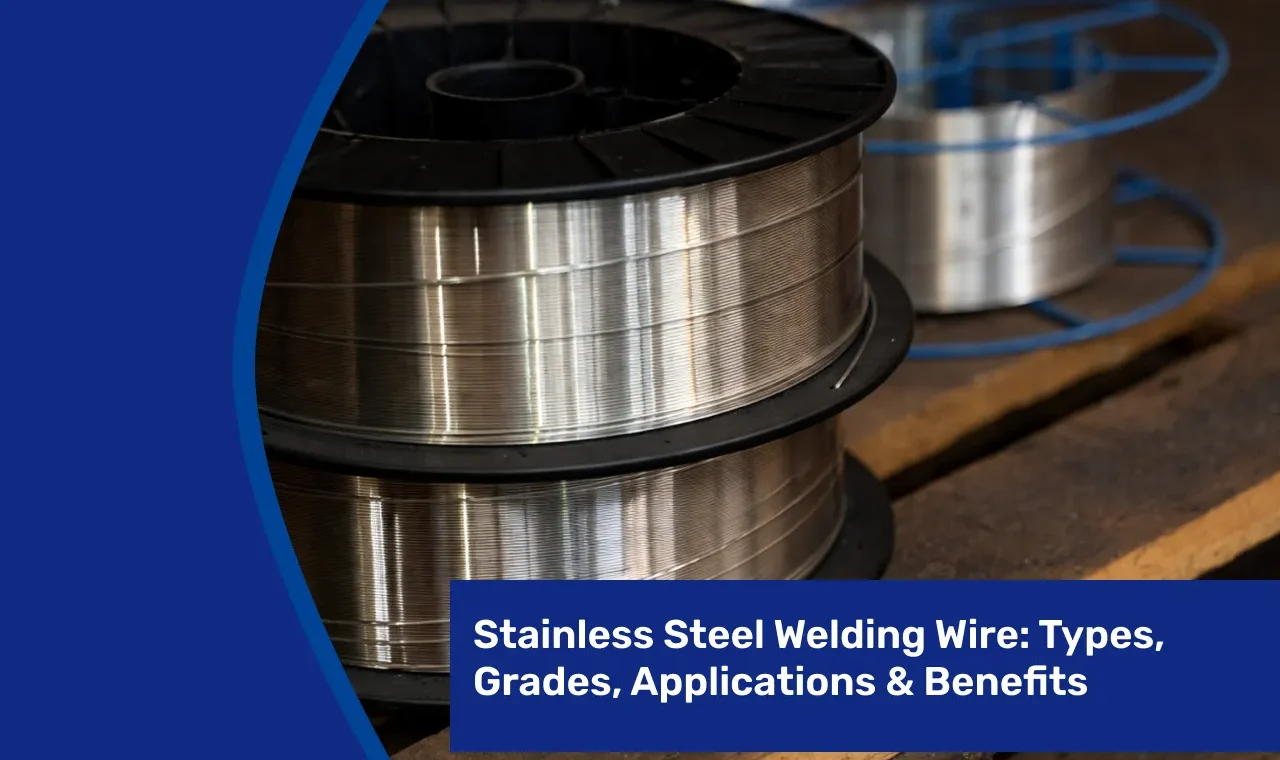
Stainless steel welding wire is an essential filler material used in modern welding processes for joining stainless steel components. It plays a crucial role in industries where durability, corrosion resistance, and strong weld joints are required. From heavy industrial fabrication to precision engineering, stainless steel welding wires help ensure reliable and high-quality welds across many applications.
These wires are specifically designed to provide excellent arc stability, smooth wire feeding, and consistent welding performance. Because stainless steel materials are widely used in sectors such as construction, automotive manufacturing, chemical processing, food equipment production, and industrial fabrication, the demand for high-quality welding wire for stainless steel continues to grow.
Understanding the types, grades, applications, and benefits of industrial stainless steel welding wire helps manufacturers and welders select the most suitable welding material for their specific requirements. Choosing the right welding consumables ensures stronger weld joints, improved corrosion resistance, and better overall welding efficiency.
What is Stainless Steel Welding Wire?
Stainless steel welding wire is a filler material used during welding processes to join stainless steel parts together. During welding, the stainless steel filler wire melts and fills the gap between metal pieces, forming a strong and durable weld joint.
These welding wires are specially formulated to match the chemical composition and mechanical properties of different stainless steel grades used in industrial applications. This helps maintain corrosion resistance and strength in the welded area. Welding wire for stainless steel is commonly used in processes such as MIG (Metal Inert Gas) welding, TIG (Tungsten Inert Gas) welding, and flux-cored welding.
Since stainless steel components are often used in demanding environments, stainless steel welding consumables must provide excellent resistance to corrosion, high temperatures, and mechanical stress. High-quality wires also offer smooth wire feeding and stable arc performance, which improves welding quality and productivity.
Types of Stainless Steel Welding Wire
MIG Stainless Steel Welding Wire
MIG stainless steel welding wire is widely used in automated and semi-automatic welding processes. This type of industrial welding wire allows faster welding speeds and higher productivity, making it ideal for large-scale manufacturing.
MIG welding wires provide smooth wire feeding and stable arc characteristics, which help achieve consistent weld quality. They are commonly used in industries such as automotive manufacturing, construction, and structural fabrication where efficiency is essential.
TIG Stainless Steel Welding Wire
TIG stainless steel welding wire is used in applications that require high precision and clean welds. This stainless steel filler wire is ideal for welding thin materials and projects where weld appearance and quality are critical.
TIG welding offers better control over the welding process and produces high-quality welds with minimal spatter. Industries such as aerospace, food processing equipment manufacturing, and precision engineering frequently use TIG welding with stainless steel filler rods.
Flux-Cored Stainless Steel Welding Wire
Flux-cored stainless steel welding wire contains a core of flux material that protects the weld pool from contamination. This type of welding wire for stainless steel fabrication is particularly useful in outdoor welding environments where shielding gas protection may not be practical.
Flux-cored wires provide deeper penetration and strong weld joints, making them suitable for heavy structural welding and large industrial fabrication projects.
Common Grades of Stainless Steel Welding Wire
ER308 / ER308L
ER308 and ER308L are among the most widely used stainless steel welding wire grades. These wires are commonly used for welding stainless steels such as 304 and 304L.
ER308L contains lower carbon content, which helps reduce the risk of carbide precipitation and improves corrosion resistance. These wires are widely used in general stainless steel fabrication and industrial welding applications.
ER309 / ER309L
ER309 and ER309L welding wires are designed for welding dissimilar metals, such as stainless steel to carbon steel. These industrial stainless steel welding wires provide excellent crack resistance and strong weld joints.
They are commonly used in repair work, structural fabrication, and industrial applications where different metal materials must be joined together.
ER316 / ER316L
ER316 and ER316L welding wires offer superior corrosion resistance compared to other stainless steel welding wire grades. These wires are commonly used in marine environments and chemical processing equipment.
ER316L contains lower carbon content, which improves corrosion resistance and weld quality, making it suitable for demanding industrial applications.
Key Applications of Stainless Steel Welding Wire
Construction and Infrastructure
One of the most important applications of stainless steel welding wire is in the construction industry. It is used for structural fabrication, bridges, pipelines, and architectural components that require long-term durability.
Automotive and Transportation
In the automotive sector, stainless steel welding wires are used to manufacture exhaust systems, structural components, and stainless steel parts that require high heat resistance and durability.
Food Processing Equipment
Food processing equipment must meet strict hygiene and corrosion-resistance standards. Welding wire for stainless steel equipment is used to fabricate tanks, pipelines, and processing machines in the food and beverage industry.
Chemical and Petrochemical Industries
Chemical plants rely heavily on stainless steel materials because of their corrosion resistance. Industrial stainless steel welding wire is used to weld equipment and pipelines that operate in highly corrosive environments.
Industrial Fabrication and Manufacturing
Many manufacturing industries use stainless steel welding consumables to produce machinery components, industrial equipment frames, and heavy structural parts.
Benefits of Stainless Steel Welding Wire
Excellent Corrosion Resistance
One of the major benefits of stainless steel welding wire is its resistance to corrosion. This makes it ideal for environments exposed to chemicals, moisture, and harsh weather conditions.
Strong and Durable Weld Joints
High-quality welding wire for stainless steel produces strong weld joints capable of withstanding heavy loads and mechanical stress.
Smooth Wire Feeding and Arc Stability
Premium stainless steel welding wires provide smooth wire feeding and consistent arc stability, helping improve welding efficiency and overall weld quality.
High Temperature Resistance
Stainless steel welds can withstand extreme temperatures, making industrial stainless steel welding wire suitable for automotive, power generation, and chemical industries.
Long Service Life
Because of their strength and corrosion resistance, welds created using stainless steel filler wire offer long-lasting performance in demanding industrial environments.
Factors to Consider When Choosing Stainless Steel Welding Wire
Selecting the right stainless steel welding wire depends on several important factors.
First, the welding process must be considered. MIG, TIG, or flux-cored welding processes require specific types of welding wire for stainless steel.
Second, the compatibility between the welding wire and the base metal must be ensured. Selecting the correct stainless steel welding wire grade helps maintain the desired mechanical and corrosion-resistant properties.
Third, the operating environment must be evaluated. Applications exposed to chemicals, moisture, or high temperatures may require corrosion-resistant grades such as ER316.
Finally, factors such as wire diameter, welding equipment compatibility, and required weld strength should also be considered before selecting the appropriate welding consumable.
Conclusion
Stainless steel welding wire plays a vital role in modern industrial welding applications. Its ability to create strong, corrosion-resistant weld joints makes it an essential material for industries such as construction, automotive manufacturing, chemical processing, and food equipment production.
Understanding the different types of stainless steel welding wire, their grades, applications, and benefits helps welders and manufacturers choose the most suitable welding material. Selecting the right industrial stainless steel welding wire not only improves welding performance but also ensures the durability and reliability of welded structures.
If you are looking for high-quality welding solutions, Contact for stainless steel welding wire to find the right products for your industrial requirements.
FAQs
1. What is stainless steel welding wire used for?
Stainless steel welding wire is used as a filler material in welding processes to join stainless steel components and produce strong, corrosion-resistant weld joints.
2. What are the common grades of stainless steel welding wire?
Common grades include ER308, ER309, and ER316, which are designed for different stainless steel welding applications.
3. What is the difference between MIG and TIG stainless steel welding wire?
MIG welding wires are typically used for faster automated welding processes, while TIG welding wires are used for precision welding where high-quality welds are required.
4. Which industries use stainless steel welding wire?
Industries such as construction, automotive manufacturing, chemical processing, food equipment production, and heavy fabrication widely use stainless steel welding wire.
5. How do you choose the right stainless steel welding wire?
Choosing the right welding wire depends on the welding process, base metal compatibility, environmental conditions, and the required weld strength.