Introduction
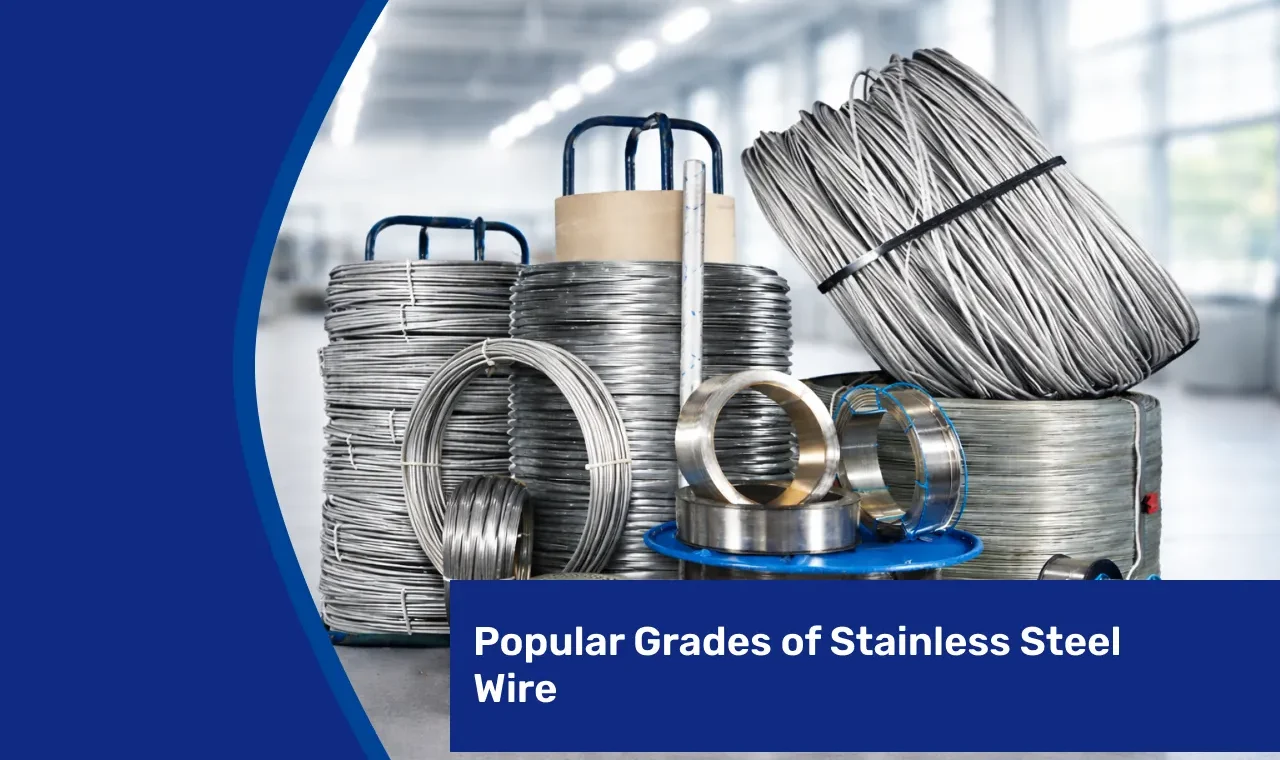
Stainless steel wires are widely used across industrial, commercial, and manufacturing sectors due to their strength, corrosion resistance, and long service life. However, not all stainless steel wires perform the same. The grade of stainless steel wire plays a critical role in determining its mechanical properties, durability, and suitability for specific uses.
In this guide, we explore the most popular grades of stainless steel wire, their key characteristics, and why choosing the right grade ensures optimal performance and reliability.
Understanding Stainless Steel Wire Grades
Stainless steel wire grades are defined by their chemical composition and metallurgical structure. Each grade contains varying levels of chromium, nickel, carbon, and other alloying elements that influence the wire’s resistance to corrosion, tensile strength, heat tolerance, and weldability.
- Chromium enhances corrosion resistance by forming a protective oxide layer
- Nickel improves ductility, toughness, and formability
- Molybdenum increases resistance to chlorides and harsh environments
- Carbon affects hardness and mechanical strength
Based on composition, stainless steel wire grades are commonly categorized into:
- Austenitic grades (304, 316, 310) – excellent corrosion resistance and formability
- Martensitic grades (410) – higher strength and hardness
- Welding grades (308, 316L) – optimized for strong, crack-resistant welds
Popular Stainless Steel Wire Grades
Certain stainless steel wire grades are preferred globally due to their balanced performance, availability, and cost-effectiveness. These grades are used across fabrication, welding, spring manufacturing, wiring, and structural applications.
Below are the most commonly used stainless steel wire grades supplied by leading manufacturers.
Stainless Steel 304 Wire
Stainless Steel 304 wire is the most widely used grade due to its excellent balance of corrosion resistance, strength, and workability.
Key Properties:
- High resistance to oxidation and corrosion
- Good ductility and formability
- Non-magnetic in annealed condition
Advantages:
- Easy to fabricate and shape
- Performs well in normal atmospheric conditions
- Cost-effective compared to higher alloy grades
SS 304 wire is commonly used as a general-purpose stainless steel wire for wiring, fasteners, fabrication, and light industrial applications.
Stainless Steel 316 Wire
Stainless Steel 316 wire offers enhanced corrosion resistance, especially in aggressive and chloride-rich environments, due to the addition of molybdenum.
Key Properties:
- Superior resistance to corrosion and pitting
- Excellent durability in harsh conditions
- Good strength and flexibility
Advantages:
- Ideal for marine and chemical exposure
- Longer service life compared to SS 304
- Maintains strength at elevated temperatures
SS 316 wire is often selected where environmental resistance is critical, making it suitable for demanding industrial conditions.
Stainless Steel 308 & 316L Wire
Stainless Steel 308 and 316L wires are specially developed for welding applications, offering strong joints and excellent metallurgical compatibility.
Stainless Steel 308 Wire
- Designed primarily for welding SS 304 materials
- Provides strong, crack-resistant welds
- Commonly used as SS filler wire
Stainless Steel 316L Wire
- Low carbon content reduces carbide precipitation
- Enhances corrosion resistance in welded areas
- Ideal for stainless steel MIG wire and TIG welding
Benefits of Welding Grades:
- Smooth arc stability
- Strong weld penetration
- Improved resistance to intergranular corrosion
These grades are essential in fabrication and structural welding where joint integrity is crucial.
Stainless Steel 310 Wire
Stainless Steel 310 wire is known for its exceptional heat resistance, making it suitable for high-temperature environments.
Key Properties:
- High chromium and nickel content
- Excellent oxidation resistance at elevated temperatures
- Maintains mechanical stability under thermal stress
Advantages:
- Performs well in continuous high-heat conditions
- Resists scaling and deformation
- Longer lifespan in thermal applications
SS 310 wire is preferred in industries requiring heat-resistant stainless steel wire solutions.
Stainless Steel 410 Wire
Stainless Steel 410 wire is a martensitic grade valued for its strength and hardness.
Key Properties:
- High tensile strength
- Moderate corrosion resistance
- Magnetic in nature
Advantages:
- Excellent wear resistance
- Suitable for load-bearing components
- Performs well in mechanical stress applications
SS 410 wire is commonly used for stainless steel spring wire, industrial components, and applications requiring strength over corrosion resistance.
Why Choose Ratanakar Stainless Steel Wires
Ratanakar is a trusted manufacturer and supplier of premium stainless steel wires, offering a comprehensive range of popular grades to meet the diverse requirements of industrial, commercial, and manufacturing applications.
Why Ratanakar Stands Out:
- Wide Selection of Grades: From SS 304 and 316 to SS 410 and 310, Ratanakar provides wires for every application.
- Precise Diameter Control & Consistent Quality: Advanced manufacturing ensures uniform strength, flexibility, and durability.
- Multiple Surface Finish Options: Soft annealed, matte, bright, or coated finishes to suit specific needs.
- Bulk Production Capability with Timely Delivery: Reliable supply for large-scale projects and export orders.
- Custom Packaging Options: Tailored packaging solutions to meet domestic and international client requirements.
With modern infrastructure, strict quality standards, and expert craftsmanship, Ratanakar guarantees reliable, long-lasting stainless steel wire solutions that enhance efficiency, safety, and performance for every industrial application.
Conclusion
Selecting the right stainless steel wire grade is crucial for achieving maximum performance, durability, and cost efficiency. From versatile SS 304 wire for general-purpose use to high-strength SS 410 and heat-resistant SS 310, each grade is designed for specific industrial applications.
Partnering with an experienced and trusted manufacturer like Ratanakar guarantees access to a wide range of high-quality stainless steel wire grades, consistent supply, and products that meet stringent industry standards. Contact us for SS wire requirements to discuss your specifications, bulk orders, or technical queries. Our team is ready to support your project with the right grade and consistent quality supply.
FAQS
1. What are the most popular grades of stainless steel wire?
The most popular stainless steel wire grades include 304, 316, 308, 316L, 310, and 410, widely used for their corrosion resistance, strength, weldability, and durability.
2. Which stainless steel wire grade is best for general-purpose use?
Stainless Steel 304 wire is ideal for general-purpose applications due to its excellent corrosion resistance, good formability, easy fabrication, and cost-effective performance.
3. What is the difference between SS 304 and SS 316 wire?
SS 316 wire offers higher corrosion resistance than SS 304 because of added molybdenum, making it suitable for harsh environments, while SS 304 is more economical.
4. Which stainless steel wire grade is used for welding applications?
Stainless Steel 308 and 316L wires are commonly used for welding. SS 308 is suitable for welding 304 steel, while 316L improves corrosion resistance in weld joints.
5. Which stainless steel wire grade is suitable for high-temperature use?
Stainless Steel 310 wire is suitable for high-temperature applications due to its high chromium and nickel content, offering excellent heat resistance and thermal stability.