Introduction
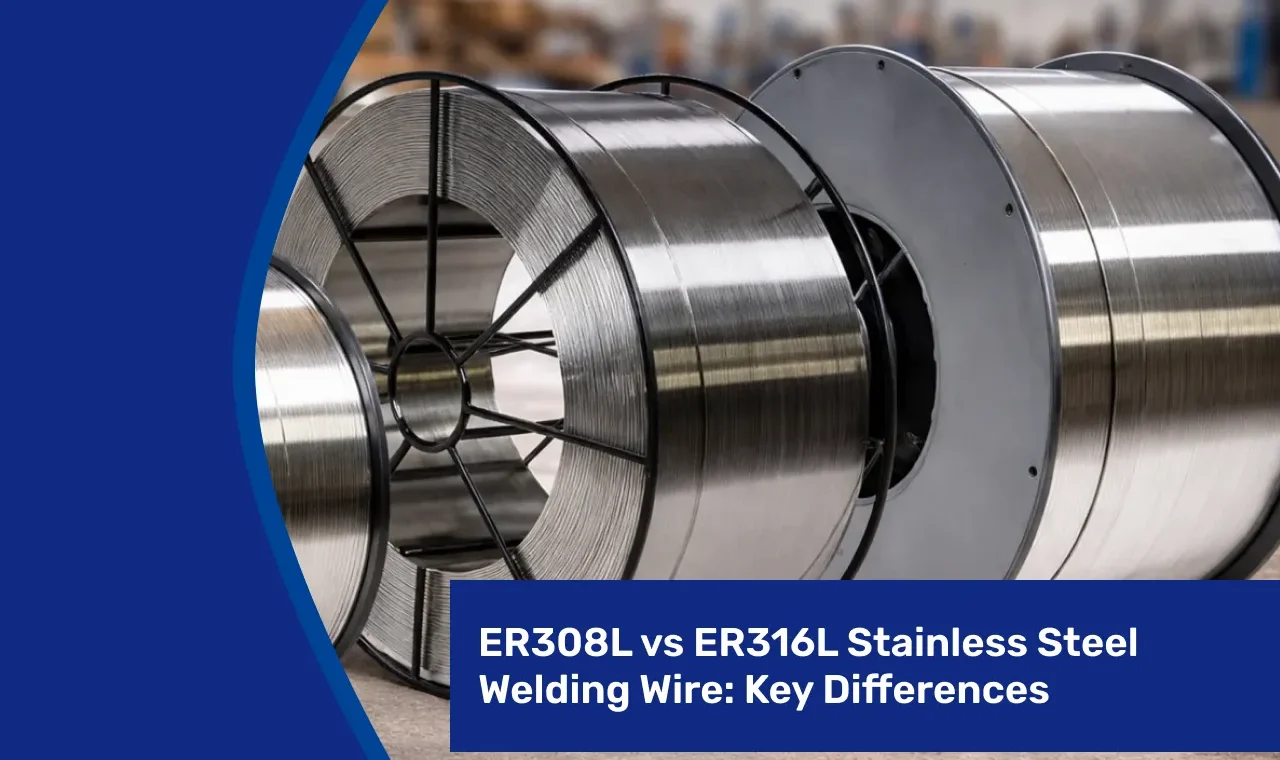
Stainless steel welding wire is essential for producing strong, durable, and corrosion-resistant welds across industrial fabrication, construction, marine, and chemical processing applications. Among the most widely used filler metals, ER308L and ER316L stainless steel welding wires are specifically designed for welding austenitic stainless steels and are known for their excellent weldability and performance.
While both ER308L and ER316L offer reliable strength and corrosion resistance, they are engineered for different environments and service conditions. The key distinction lies in their chemical composition, especially the presence of molybdenum in ER316L, which significantly enhances resistance to chlorides, pitting, and harsh chemical exposure.
Choosing the correct welding wire is critical for ensuring long-term weld integrity, structural performance, and cost efficiency. In this article, we provide a detailed comparison of ER308L vs ER316L stainless steel welding wire, including their composition, properties, applications, and key differences to help you select the right option for your specific welding requirements.
ER308L vs ER316L Welding Wire Comparison Table
Feature | ER308L | ER316L |
Compatible Base Metals | 304, 304L Stainless Steel | 316, 316L Stainless Steel |
AWS Classification | ER308L | ER316L |
Chromium Content | 19–21% | 18–20% |
Nickel Content | 9–11% | 11–14% |
Molybdenum Content | Not Present | 2–3% |
Corrosion Resistance | Excellent | Superior |
Chloride Resistance | Moderate | Excellent |
Pitting & Crevice Corrosion Resistance | Good | Excellent |
Marine Applications | Limited | Highly Recommended |
Chemical Processing Applications | Suitable | Ideal |
Heat Resistance | High | High |
Weldability | Excellent | Excellent |
Typical Base Material | 304/304L Stainless Steel | 316/316L Stainless Steel |
Relative Cost | Lower | Higher |
Common Industries | Food Processing, Construction, General Fabrication | Marine, Chemical Processing, Pharmaceutical, Offshore |
Understanding ER308L and ER316L Stainless Steel Welding Wire
What Is ER308L Stainless Steel Welding Wire?
ER308L is a low-carbon stainless steel filler wire primarily used for welding 304 and 304L stainless steel. The “L” designation indicates a low carbon content, which helps reduce carbide precipitation during welding and minimizes the risk of intergranular corrosion. Due to its excellent weldability and corrosion resistance, ER308L is one of the most widely used stainless steel welding wires in fabrication and manufacturing industries.
Key benefits of ER308L stainless steel welding wire include:
- Excellent weldability and arc stability
- Strong corrosion resistance in general industrial environments
- Smooth wire feeding and consistent weld quality
- Good mechanical strength and ductility
- Reduced risk of weld cracking and carbide precipitation
- Suitable for both MIG welding (GMAW) and TIG (GTAW) welding processes
Common applications of ER308L welding wire include food processing equipment, storage tanks, pressure vessels, architectural structures, and general stainless steel fabrication.
What Is ER316L Stainless Steel Welding Wire?
ER316L is a low-carbon stainless steel welding wire designed for welding 316 and 316L stainless steel grades. It contains molybdenum, an alloying element that significantly enhances resistance to pitting, crevice corrosion, and chloride attack. This makes ER316L an ideal choice for applications exposed to harsh chemicals, saltwater, and corrosive environments, where Alloy Welding Wire is also commonly used for compatible alloy materials.
Key benefits of ER316L stainless steel welding wire include:
- Superior corrosion resistance compared to ER308L
- Excellent resistance to chlorides, chemicals, and acids
- High resistance to pitting and crevice corrosion
- Strong mechanical properties and weld integrity
- Excellent performance in marine and offshore environments
- Suitable for both MIG (GMAW) and TIG (GTAW) welding applications
ER316L welding wire is commonly used in marine equipment, chemical processing plants, pharmaceutical manufacturing facilities, offshore structures, and water treatment systems where enhanced corrosion resistance is essential.
For a better understanding of 316-grade stainless steel, its properties and industrial applications are key to selecting ER316L welding wire.
Key Differences Between ER308L and ER316L Stainless Steel Welding Wire
Although ER308L and ER316L share many similarities, several important differences influence their performance and suitability for specific applications.
Chemical Composition
The most significant difference between ER308L and ER316L stainless steel welding wire is the presence of molybdenum in ER316L. This alloying element enhances corrosion resistance, particularly in chloride-rich and chemically aggressive environments.
Element | ER308L | ER316L |
Chromium | 19–21% | 18–20% |
Nickel | 9–11% | 11–14% |
Molybdenum | Not Present | 2–3% |
The addition of molybdenum in ER316L improves resistance to pitting and crevice corrosion, making it suitable for marine, offshore, and chemical processing applications.
Corrosion Resistance
Both ER308L and ER316L offer excellent corrosion resistance compared to standard steel welding wires. However, ER316L provides superior protection against corrosion due to its molybdenum content.
ER308L performs well in general industrial environments and is commonly used for welding 304 and 304L stainless steel. In contrast, ER316L is specifically designed for applications exposed to chemicals, saltwater, high humidity, and chlorides.
For projects where long-term corrosion resistance is critical, ER316L is generally the preferred choice. For a deeper technical understanding of stainless steel filler materials and their applications, refer to our detailed guide on welding wire grades.
Mechanical Properties
ER308L and ER316L stainless steel welding wires provide excellent mechanical strength, ductility, and weld integrity. Both grades produce strong and durable welds capable of withstanding demanding operating conditions.
While their mechanical properties are similar, ER316L often delivers better long-term performance in corrosive environments by maintaining structural integrity and reducing the risk of corrosion-related failures.
Heat Resistance
Both welding wires offer excellent resistance to elevated temperatures and oxidation. They maintain weld strength and stability in applications involving heat exposure, making them suitable for industrial processing equipment, pressure vessels, and high-temperature service environments.
Chloride and Saltwater Resistance
One of the most important differences between ER308L and ER316L welding wire is their resistance to chlorides and saltwater.
ER308L can tolerate mild chloride exposure but may be susceptible to pitting corrosion over time when used in highly corrosive environments.
ER316L is specifically engineered to resist chloride attack and provides superior performance in:
- Marine environments
- Coastal facilities
- Offshore platforms
- Chemical processing plants
- Water treatment facilities
- Pharmaceutical manufacturing equipment
For applications exposed to seawater or chloride-containing solutions, ER316L is the recommended choice.
Cost Comparison
ER316L stainless steel welding wire is generally more expensive than ER308L due to its higher nickel content and the addition of molybdenum. While the initial material cost is higher, ER316L often provides greater long-term value in corrosive environments by reducing maintenance requirements, repair costs, and equipment downtime.
ER308L remains a cost-effective solution for general fabrication and applications where enhanced chloride resistance is not required.
ER308L vs ER316L Welding Wire Applications Comparison
The selection of ER308L or ER316L welding wire depends on the base material and working environment. ER308L is ideal for general stainless steel fabrication, while ER316L is preferred for corrosive and marine environments due to its higher corrosion resistance.
Application | ER308L | ER316L |
Food Processing Equipment | ✓ | ✓ |
Kitchen Equipment | ✓ | ✓ |
Architectural Structures | ✓ | Limited |
Storage Tanks | ✓ | ✓ |
Pharmaceutical Equipment | Limited | ✓ |
Chemical Processing Plants | Limited | ✓ |
Marine Equipment | Not Recommended | ✓ |
Offshore Structures | Not Recommended | ✓ |
Water Treatment Facilities | Limited | ✓ |
ER308L is suitable for general-purpose applications, while ER316L excels in aggressive environments requiring enhanced corrosion protection.
When Should You Use ER308L Stainless Steel Welding Wire?
ER308L stainless steel welding wire is best suited for welding 304 and 304L stainless steel, where good corrosion resistance, weld quality, and cost efficiency are required.
Welding 304 and 304L Stainless Steel
ER308L offers excellent compatibility with 304/304L grades, producing strong, crack-resistant, and reliable welds for general fabrication.
Food Processing Equipment
ER308L is widely used in food-grade applications where 304 stainless steel is common, such as:
- Food storage tanks
- Conveyor systems
- Commercial kitchen equipment
- Brewing equipment
Structural and Architectural Fabrication
Due to its good strength and clean weld finish, ER308L is commonly used in construction and structural applications, including stainless steel frameworks and panels.
General Industrial Manufacturing
ER308L is suitable for a wide range of industrial components such as:
- Pressure vessels
- Fabricated parts
- Industrial machinery
- Stainless steel assemblies
Cost-Effective Applications
When high chloride or chemical resistance is not required, ER308L provides a reliable and economical welding solution without compromising weld quality.
When Should You Use ER316L Stainless Steel Welding Wire?
ER316L stainless steel welding wire is recommended when high corrosion resistance is essential, especially in environments exposed to moisture, chlorides, and aggressive chemicals.
Marine and Offshore Applications
ER316L performs exceptionally well in saltwater and humid environments, making it ideal for:
- Shipbuilding
- Offshore platforms
- Marine hardware
- Coastal infrastructure
Chemical Processing Equipment
In chemical industries where equipment is exposed to corrosive substances, ER316L ensures long-term durability. Common applications include:
- Chemical tanks
- Pipelines
- Reactors
- Processing vessels
Pharmaceutical Industry
ER316L is widely used in pharmaceutical manufacturing where cleanliness, hygiene, and corrosion resistance are critical.
Water Treatment Facilities
Water treatment plants often deal with chlorides and harsh chemicals, making ER316L a preferred choice for reliable performance.
Coastal and Corrosive Environments
ER316L is ideal for any installation exposed to high humidity, salt air, or corrosive industrial conditions, ensuring longer service life and reduced maintenance.
Which Welding Processes Can Use ER308L and ER316L?
Both ER308L and ER316L stainless steel welding wires are versatile and compatible with several common welding processes used in industrial fabrication.
MIG Welding (GMAW)
MIG welding is widely used for its speed and productivity in stainless steel fabrication. Both ER308L and ER316L provide stable arc performance and consistent weld quality, making them suitable for high-volume production work.
TIG Welding (GTAW)
TIG welding is preferred for applications requiring precision and clean weld finishes. ER308L and ER316L perform well in TIG welding, offering excellent control, strong penetration, and minimal spatter.
Automated and Robotic Welding
In modern manufacturing environments, both welding wires are commonly used in automated and robotic systems due to:
- Smooth wire feeding
- Stable arc characteristics
- High repeatability and productivity
Industrial Fabrication
ER308L and ER316L are widely used in fabrication workshops for producing stainless steel components, assemblies, and equipment where consistent weld quality is required.
Standards and Specifications for ER308L and ER316L Welding Wire
When selecting stainless steel welding wire, following international standards is essential to ensure weld quality, safety, and performance.
AWS A5.9 Standard
ER308L and ER316L welding wires are classified under AWS A5.9, which defines requirements for stainless steel filler metals used in welding applications. This standard ensures consistent chemical composition, mechanical properties, and weld performance.
ASME Standards
ASME codes are widely used in pressure vessel, piping, and structural applications. Using ER308L and ER316L wires that comply with ASME requirements ensures reliability in critical industrial systems.
ISO Standards
For global projects, ISO welding standards help maintain uniform quality and compatibility across international fabrication and engineering practices.
Quality Certifications
When sourcing welding wire, it is important to verify manufacturer certifications such as:
- Material Test Certificates (MTC)
- Quality assurance documentation
- Traceability records
- Compliance with industry standards
These certifications ensure product consistency, reliability, and suitability for industrial applications
How to Choose Between ER308L and ER316L Stainless Steel Welding Wire
Selecting the right stainless steel welding wire depends on the base material, service environment, and required corrosion resistance.
Consider the Base Material
The first step is to match the filler metal with the base stainless steel grade:
- 304 / 304L stainless steel → ER308L
- 316 / 316L stainless steel → ER316L
Evaluate Environmental Conditions
If the application is exposed to harsh conditions such as saltwater, chlorides, chemicals, or high humidity, ER316L is generally the better choice due to its higher corrosion resistance.
Assess Corrosion Resistance Requirements
For projects in aggressive or corrosive environments, ER316L provides significantly better long-term protection compared to ER308L.
Check Industry Standards
Some industries have strict welding specifications that may require a specific filler metal grade to ensure compliance, safety, and performance.
Balance Performance and Cost
ER308L is a cost-effective option for general fabrication, while ER316L offers higher durability in demanding environments at a higher material cost.
Common Mistakes to Avoid When Selecting Stainless Steel Welding Wire
Selecting the wrong stainless steel welding wire can reduce weld quality, shorten service life, and increase maintenance costs. Avoiding common mistakes helps ensure better performance and reliability.
Choosing Based on Price Only
Selecting the lowest-cost welding wire may lead to poor corrosion resistance and higher long-term repair or replacement costs.
Ignoring Environmental Conditions
Failing to consider exposure to chlorides, chemicals, moisture, or humidity can result in premature corrosion and weld failure.
Using the Wrong Filler Metal Grade
Using ER308L in applications that require ER316L can significantly reduce corrosion resistance and overall durability.
Overlooking Industry Requirements
Always check project specifications and industry standards, as some applications require specific welding wire grades for compliance.
Ignoring Quality Certifications
Always choose welding wire from trusted manufacturers that provide proper certifications, quality assurance, and traceability.
Conclusion
Both ER308L and ER316L stainless steel welding wires offer excellent weldability, strength, and durability. However, the correct selection depends on the base metal, working environment, and required level of corrosion resistance.
ER308L welding wire is best suited for welding 304 and 304L stainless steel in general fabrication, food processing equipment, and structural applications where standard corrosion resistance is sufficient and cost efficiency is important.
ER316L welding wire should be chosen when higher corrosion resistance is required, especially in environments exposed to chlorides, chemicals, or saltwater. Its superior resistance makes it ideal for marine, pharmaceutical, chemical processing, and offshore applications.
Understanding the key differences between ER308L and ER316L stainless steel welding wires helps manufacturers, fabricators, and engineers select the right filler metal, ensuring long-lasting weld performance, reduced maintenance, and improved reliability.
Frequently Asked Questions
What is the main difference between ER308L and ER316L welding wire?
The main difference is that ER316L contains molybdenum, which provides superior corrosion resistance, especially in chloride-rich and marine environments. ER308L does not contain molybdenum and is used for general-purpose stainless steel welding.
When should I use ER308L welding wire?
ER308L welding wire is used for welding 304 and 304L stainless steel. It is ideal for general fabrication, food processing equipment, kitchen tools, storage tanks, and architectural applications where standard corrosion resistance is sufficient.
Where is ER316L welding wire commonly used?
ER316L welding wire is commonly used in marine, offshore, chemical processing, pharmaceutical, and water treatment industries due to its excellent resistance to chlorides and harsh chemicals.
Can ER316L be used instead of ER308L?
Yes, ER316L can be used instead of ER308L in some cases, but it is usually not necessary. ER316L is more expensive and is only recommended when higher corrosion resistance is required.
Which welding wire offers better corrosion resistance?
ER316L offers better corrosion resistance than ER308L because it contains molybdenum, which improves resistance to pitting, crevice corrosion, and saltwater exposure.
Can ER308L be used for marine applications?
ER308L is not recommended for marine environments because it has lower resistance to chlorides. ER316L is the preferred choice for marine and coastal applications.
Are ER308L and ER316L suitable for MIG and TIG welding?
Yes, both ER308L and ER316L are widely used in MIG (GMAW) and TIG (GTAW) welding processes due to their excellent arc stability and weld quality.
Is ER316L more expensive than ER308L?
Yes, ER316L is more expensive because it contains higher nickel content and molybdenum, which enhance corrosion resistance and performance in harsh environments.
Can ER308L weld 316 stainless steel?
It is possible in some cases, but not recommended. ER316L should be used for welding 316 stainless steel to ensure proper corrosion resistance and long-term durability.
Which industries use ER316L welding wire the most?
ER316L is widely used in marine, chemical processing, pharmaceutical, offshore oil and gas, and water treatment industries where corrosion resistance is critical.