Introduction
Choosing the right material is essential in industrial applications such as manufacturing, construction, automotive, electrical, and chemical processing. The performance, safety, and lifespan of components depend on the material’s quality.
316 stainless steel is a premium choice due to its superior corrosion resistance, high strength, durability, and versatility, making it suitable for both heavy-duty and precision applications.
This blog covers 316 stainless steel properties, benefits, industrial applications, selection tips, and the importance of sourcing from a trusted manufacturer Ratanakar.
What Is 316 Stainless Steel?
316 stainless steel is an austenitic alloy known for its excellent corrosion resistance and mechanical strength.
- Composition: 16–18% chromium, 10–14% nickel, and 2–3% molybdenum, enhancing resistance to chloride-induced corrosion.
- Corrosion & Strength: Ideal for marine, chemical, and high-humidity environments with high tensile and yield strength.
- Applications: Used in marine, chemical, pharmaceutical, food processing, and medical industries.
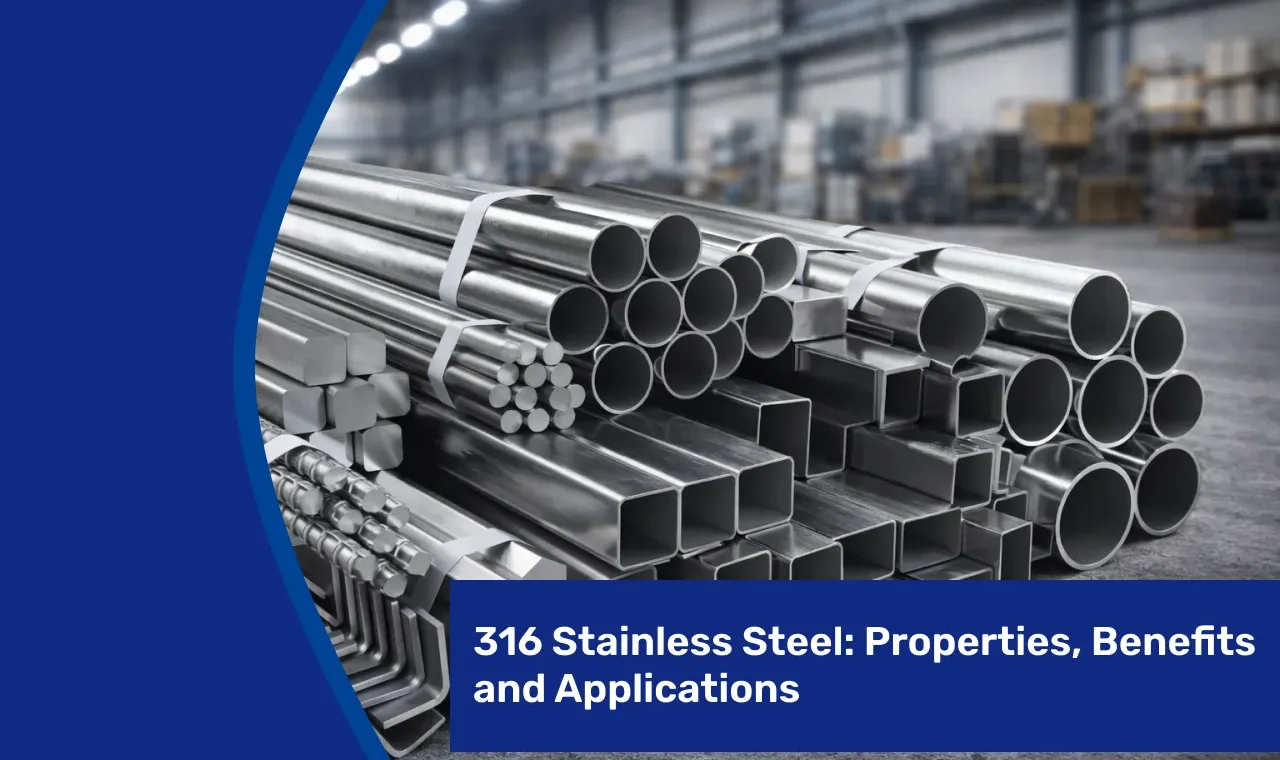
- Versatility: Available as wires, rods, sheets, and pipes with various surface finishes for industrial and precision applications.
This combination of durability, corrosion resistance, and adaptability makes 316 stainless steel a top choice for demanding industrial environments.
Key Properties of 316 Stainless Steel
316 stainless steel is widely used in industries due to its superior material properties that ensure reliability, safety, and durability in demanding environments.
1. Superior Corrosion Resistance
- Contains chromium, nickel, and molybdenum, which prevent rust, pitting, and crevice corrosion.
- Performs exceptionally in marine, coastal, chemical, and high-humidity environments.
- Resistant to chlorides and acidic chemicals, making it ideal for chemical tanks, piping, and marine fittings.
2. High Mechanical Strength & Durability
- Offers tensile strength up to 515 MPa and yield strength around 205 MPa, ensuring long-term structural integrity.
- Maintains performance under heavy loads, pressure, and stress, suitable for springs, fasteners, and industrial machinery.
- Provides reliable durability in both heavy-duty and precision applications, reducing the need for frequent replacements.
3. Heat & Temperature Resistance
- Maintains mechanical stability at temperatures up to 870°C (1600°F) intermittently and 925°C (1700°F) in continuous operation.
- Ideal for furnaces, exhaust systems, heat exchangers, and high-temperature processing equipment.
- Prevents oxidation and thermal fatigue, extending the lifespan of components in extreme heat environments.
4. Non-Magnetic, Hygienic & Safe
- Non-reactive and non-magnetic, making it safe for electrical, medical, and food applications.
- Meets food and pharmaceutical hygiene standards, suitable for clean-room environments, surgical tools, and food processing equipment.
- Reduces risk of contamination or chemical reactions, ensuring product safety and compliance.
5. Excellent Weldability & Fabrication
- Can be welded, bent, drawn, or machined with minimal risk of cracking or corrosion.
- Available in wires, rods, sheets, and pipes with bright, matte, or coated finishes to suit specific industrial needs.
- Supports custom fabrication for tailored industrial, medical, or marine applications, enhancing efficiency and cost-effectiveness.
These enhanced properties make 316 stainless steel a premium choice for industries requiring strength, durability, and corrosion resistance, while maintaining safety, hygiene, and long-term reliability.
Benefits of Using 316 Stainless Steel
316 stainless steel offers a range of advantages that make it a preferred choice for industrial applications:
- Long-Term Reliability: Maintains consistent performance in harsh and demanding environments
- Low Maintenance & Cost-Efficient: Minimizes replacement needs and reduces operational downtime
- Corrosion and Heat Resistance: Withstands marine, chemical, and high-temperature industrial conditions
- Superior Surface Finish: Available in bright, matte, and coated finishes for both functional and aesthetic needs
- Eco-Friendly & Recyclable: Fully recyclable material supporting sustainable and environmentally responsible practices
These benefits make 316 stainless steel a durable, efficient, and sustainable solution across various industries.
Industrial Applications of 316 Stainless Steel
316 stainless steel is highly versatile, making it ideal for a wide range of industrial applications, from heavy-duty machinery to precision equipment.
- Marine & Coastal Applications: Corrosion-resistant structures, fasteners, and fittings designed to withstand saltwater environments
- Chemical & Petrochemical Industries: Tanks, piping, and processing equipment resistant to harsh chemicals
- Oil & Gas Sector: Valves, tubing, and wiring that maintain strength under extreme conditions
- Food Processing & Pharmaceuticals: Equipment, clean-room tools, and storage solutions compliant with hygiene standards
- Medical Equipment: Surgical tools, implants, and medical devices requiring non-reactive, hygienic materials
- Automotive & Heavy Engineering: Springs, fasteners, and structural components with high durability and reliability
Its exceptional corrosion resistance, strength, and versatility make 316 stainless steel a preferred choice across industries, ensuring reliable performance in both heavy-duty and precision applications.
How to Choose the Right 316 Stainless Steel Product
Selecting the appropriate 316 stainless steel product is crucial for achieving optimal performance, durability, and compliance in industrial applications.
- Select the Right Form: Choose between wire, rod, sheet, or pipe based on the specific application requirements
- Size & Tolerance: Consider diameter, thickness, and mechanical strength to meet operational demands
- Surface Finish: Bright, matte, annealed, or coated finishes depending on performance and environmental conditions
- Compliance with Standards: Ensure the product meets ASTM, AISI, and EN certifications for quality and reliability
- Consult an Experienced Manufacturer: Professional guidance ensures selection of the correct grade, size, and finish for your project
By following these guidelines, industries can maximize efficiency, durability, and safety while using 316 stainless steel products.
Why Ratanakar Is a Trusted Manufacturer of 316 Stainless Steel Wires
Sourcing 316 stainless steel wires from a trusted manufacturer Ratanakar ensures high quality, reliable performance, and long-term industrial efficiency.
- Strict Quality Control: Maintains accurate chemical composition and mechanical properties
- Consistent Corrosion Resistance: Ideal for marine, chemical, and industrial environments
- Customization: Provides tailored sizes, grades, and finishes for specific applications
- Compliance with International Standards: Certified to ASTM, AISI, and EN standards
- Reliable Bulk Supply & Timely Delivery: Supports both domestic and export markets
Partnering with Ratanakar guarantees durable, compliant, and high-performance stainless steel wires for all industrial requirements.
Conclusion
316 stainless steel is a superior choice for industrial applications due to its strength, excellent corrosion resistance, durability, and versatility. From marine and chemical environments to medical and food-processing industries, it provides reliable performance in demanding conditions.
Selecting the right grade and sourcing from a trusted manufacturer like Ratanakar ensures maximum durability, compliance with international standards, and long-term industrial efficiency. For specifications, bulk supply, or project requirements, you can connect us for 316 stainless steel inquiries to discuss your needs.
FAQs
Q1. What makes 316 stainless steel corrosion resistant?
It contains chromium, nickel, and molybdenum, providing excellent resistance to rust, pitting, and corrosion in harsh and marine environments.
Q2. Is 316 stainless steel suitable for marine applications?
Yes, 316 stainless steel resists saltwater and marine corrosion, making it ideal for coastal, marine, and high-humidity environments.
Q3. What is the difference between 316 and 316L stainless steel?
316L has lower carbon content, reducing corrosion risk during welding while retaining the same strength and corrosion resistance as 316.
Q4. Can 316 stainless steel withstand high temperatures?
Yes, 316 stainless steel maintains strength and stability at elevated temperatures, making it suitable for industrial and high-heat applications.
Q5. Is 316 stainless steel suitable for food-grade applications?
Yes, 316 stainless steel is hygienic, non-reactive, and compliant with food industry standards for processing and storage equipment.