Introduction
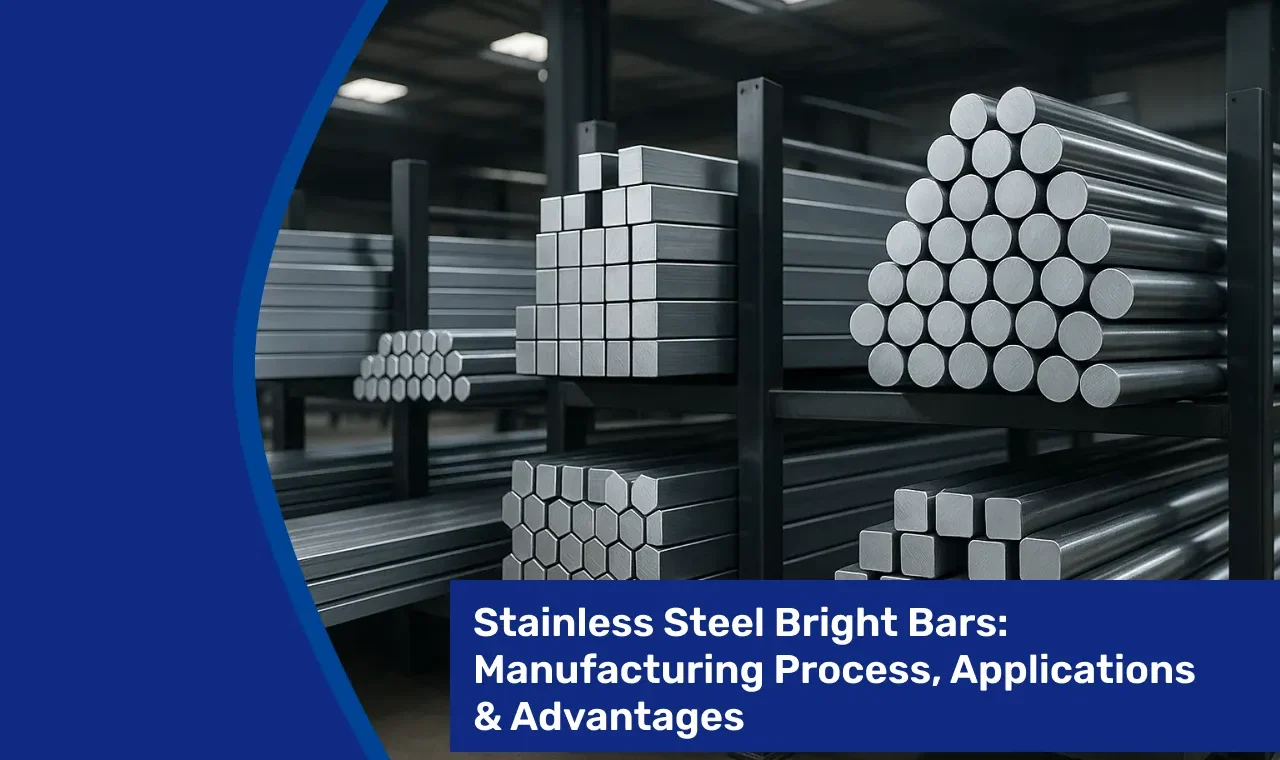
Stainless Steel Bright Bars are widely used precision-engineered products known for their smooth finish, dimensional accuracy, and excellent corrosion resistance. These bars are cold-finished stainless steel products designed for applications that demand high strength, superior surface quality, and tight tolerances.
From automotive components to heavy engineering industries, stainless steel bright bars play a critical role in modern manufacturing. In this comprehensive guide, we will explore their manufacturing process, applications, advantages, grades, and key buying considerations.
What Are Stainless Steel Bright Bars?
Stainless Steel Bright Bars are precision-engineered stainless steel bars produced through cold drawing or cold finishing processes to achieve accurate dimensions, tight tolerances, and a smooth, polished surface finish. Unlike standard hot-rolled bars, bright bars undergo additional treatments such as peeling and heat treatment to improve mechanical strength, surface quality, and overall performance.
Thanks to their superior strength, excellent corrosion resistance, and high dimensional accuracy, stainless steel bright bars are widely used in automotive, engineering, construction, and heavy industrial applications where precision and durability are critical.
Stainless Steel Bright Bars Manufacturing Process
The manufacturing process of stainless steel bright bars involves multiple precision stages to ensure high strength, superior surface finish, and accurate dimensional tolerance. Each step is carefully controlled to meet international quality standards and industrial requirements.
1. Raw Material Selection
The process begins with the selection of high-quality stainless steel billets or wire rods. The grade is chosen based on the intended application and performance requirements. Commonly used grades include:
- SS 304
- SS 316
- SS 410
- SS 420
- SS 430
The chemical composition of the raw material is thoroughly tested to ensure compliance with ASTM, EN, or ISO standards.
2. Hot Rolling
In this stage, stainless steel billets are heated at high temperatures and passed through rolling mills to form rough bar shapes. Hot rolling creates the base structure of the bar but leaves a scaled and rough surface.
3. Cold Drawing Process
Cold drawing is the most critical stage in stainless steel bright bar production. The hot-rolled bars are pulled through precision dies at room temperature to improve dimensional accuracy and surface finish.
Benefits of Cold Drawing:
- Improved dimensional accuracy
- Enhanced mechanical properties
- Increased tensile strength
- Smoother surface finish
This process distinguishes bright bars from conventional hot-rolled bars.
4. Peeling or Turning
To eliminate surface defects and ensure uniformity, the bars undergo peeling or turning operations. This step removes imperfections and enhances surface integrity.
5. Heat Treatment (Annealing)
Annealing is performed to relieve internal stresses caused by cold working. This process improves:
- Ductility
- Machinability
- Structural uniformity
Heat treatment ensures balanced mechanical properties for industrial applications.
6. Polishing and Finishing
Final finishing processes provide the characteristic bright and smooth surface. Polishing levels are adjusted according to required roughness and customer specifications.
7. Quality Testing and Inspection
Before dispatch, stainless steel bright bars undergo strict quality inspection to ensure reliability and performance. Tests include:
- Chemical composition analysis
- Tensile strength testing
- Hardness testing
- Ultrasonic testing
- Dimensional accuracy inspection
Compliance with international standards such as ASTM, EN, and ISO ensures consistent quality and long-term durability.
Grades of Stainless Steel Bright Bars
Choosing the right Grade of stainless steel bright bars is essential for ensuring strength, corrosion resistance, and long-term performance. Different grades are designed to meet specific industrial and environmental requirements.
Austenitic Grades
Austenitic stainless steel bright bars are known for excellent corrosion resistance and good formability.
- SS 304 Bright Bars: Widely used in general engineering and fabrication, SS 304 offers strong corrosion resistance and reliable mechanical properties.
- SS 316 Bright Bars: With added molybdenum, SS 316 provides superior corrosion resistance, making it ideal for marine, chemical, and pharmaceutical applications.
Martensitic Grades
SS 410 & 420 Bright Bars: These grades offer high strength and good wear resistance. They are commonly used in shafts, fasteners, valves, and other mechanical components.
Ferritic Grades
SS 430 Bright Bars: SS 430 provides moderate corrosion resistance and is a cost-effective option for decorative and light engineering applications.
Selecting the appropriate stainless steel bright bar grade ensures optimal performance and durability based on the intended use.
Applications of Stainless Steel Bright Bars
Stainless steel bright bars are widely used across industries due to their high strength, precise dimensions, and excellent corrosion resistance. Their smooth surface finish and tight tolerances make them ideal for precision machining and heavy-duty industrial applications.
1. Automotive Industry
Used in shafts, axles, fasteners, and engine components, bright bars provide durability and reliable performance under high stress conditions.
2. Construction & Infrastructure
Applied in structural supports, reinforcement components, and framework systems, they offer long-term strength and environmental resistance.
3. Oil & Gas Industry
Ideal for pumps, valves, fittings, and drilling equipment, stainless steel bright bars perform efficiently in harsh and corrosive environments.
4. Engineering & Fabrication
Commonly used in CNC machined parts, precision components, and industrial tools due to their dimensional accuracy and machinability.
5. Food & Chemical Processing
Suitable for food-grade equipment and chemical machinery where hygiene, corrosion resistance, and smooth surface finish are essential.
Advantages of Stainless Steel Bright Bars
Stainless steel bright bars provide significant performance and cost advantages, making them a preferred choice for precision and industrial applications.
1. Superior Surface Finish
Their smooth and polished surface reduces additional machining requirements and enhances the overall quality of finished components.
2. High Strength and Durability
The cold drawing process improves tensile strength and load-bearing capacity, ensuring reliable performance in demanding environments.
3. Excellent Corrosion Resistance
Stainless steel bright bars offer strong resistance to rust and corrosion, making them suitable for marine, chemical, and outdoor applications.
4. Tight Dimensional Tolerance
Accurate dimensions and strict tolerance control ensure precision in machining and engineering projects.
5. Improved Machinability
Better structural consistency reduces production time and lowers overall manufacturing costs.
6. Long Service Life
With minimal maintenance requirements and high durability, stainless steel bright bars deliver long-term value and reliability.
Sizes, Dimensions & Standards
Stainless steel bright bars are available in a wide range of sizes, shapes, and tolerances to meet diverse industrial requirements. They are manufactured according to internationally recognized standards to ensure quality, accuracy, and performance.
Common standards include:
- ASTM (American Society for Testing and Materials)
- EN (European Standards)
- DIN (German Industrial Standards)
Bright bars are produced in various standard diameters and thicknesses, with customized lengths and tolerances available based on specific project requirements. This flexibility allows manufacturers to supply precision-engineered stainless steel bright bars suitable for automotive, construction, engineering, and heavy industrial applications.
Factors to Consider Before Buying Stainless Steel Bright Bars
Selecting the right stainless steel bright bars supplier is essential to ensure quality, performance, and long-term reliability. Before making a purchase decision, review these key factors and avoid common mistakes when buying bright bars to ensure a smart investment.
Consider the following key factors:
- Correct Grade Selection – Choose the appropriate stainless steel grade based on your application and environmental conditions.
- Required Tolerance Level – Ensure the bars meet precise dimensional accuracy for machining and engineering needs.
- Surface Finish Specification – Verify the required surface smoothness and polishing standards.
- Certification Compliance – Confirm adherence to ASTM, EN, DIN, or other international quality standards.
- Production Capacity – Assess the manufacturer’s ability to handle bulk or customized orders.
- Delivery Timelines – Ensure timely supply to avoid project delays.
Partnering with a trusted stainless steel bright bar manufacturer guarantees consistent quality, technical support, and dependable performance.
Why Choose a Trusted Stainless Steel Bright Bar Manufacturer?
Choosing a reliable stainless steel bright bar manufacturer is crucial to ensure consistent quality, precision, and long-term performance. A professional and experienced manufacturer offers:
- Strict Quality Control – Comprehensive inspection and testing at every production stage
- Certified Raw Materials – Use of high-grade stainless steel that meets international standards
- Advanced Cold Drawing Facilities – Modern machinery for accurate dimensions and superior surface finish
- Custom Manufacturing Capability – Ability to produce bars in specific sizes, tolerances, and grades
- Competitive Pricing – Cost-effective solutions without compromising quality
- Timely Delivery – Efficient production and logistics support
Industrial buyers should prioritize manufacturers with proven expertise, technical knowledge, and proper certifications to ensure reliability and consistent supply.
Conclusion
Stainless Steel Bright Bars are precision-engineered products essential for modern industrial applications. Their advanced manufacturing process, superior mechanical properties, and excellent corrosion resistance make them ideal for demanding environments.
From automotive shafts to heavy engineering components, bright bars provide strength, accuracy, and durability. Selecting the right grade and a trusted manufacturer ensures long-term performance and cost efficiency.
If you are looking for high-quality stainless steel bright bars, Contact our team to discuss your requirements and get reliable supply backed by strict quality control, certified production standards, and timely delivery.
Frequently Asked Questions (FAQ)
1. What are stainless steel bright bars used for?
Stainless steel bright bars are widely used in automotive components, shafts, fasteners, precision machined parts, construction frameworks, and industrial machinery requiring high accuracy and strength.
2. How are stainless steel bright bars manufactured?
They are manufactured through hot rolling followed by cold drawing, peeling, heat treatment, and polishing to achieve superior surface finish, tight tolerances, and enhanced mechanical properties.
3. What sizes are available in stainless steel bright bars?
Stainless steel bright bars are available in various diameters, shapes (round, hex, square, flat), and custom lengths, manufactured according to ASTM, EN, and DIN standards.
4. Which grade of stainless steel bright bar is best?
SS 304 is suitable for general engineering applications, while SS 316 is ideal for marine and chemical environments due to its higher corrosion resistance.
5. Are stainless steel bright bars corrosion resistant?
Yes, stainless steel bright bars provide excellent corrosion resistance depending on the grade selected, making them suitable for harsh industrial and outdoor environments.