Introduction
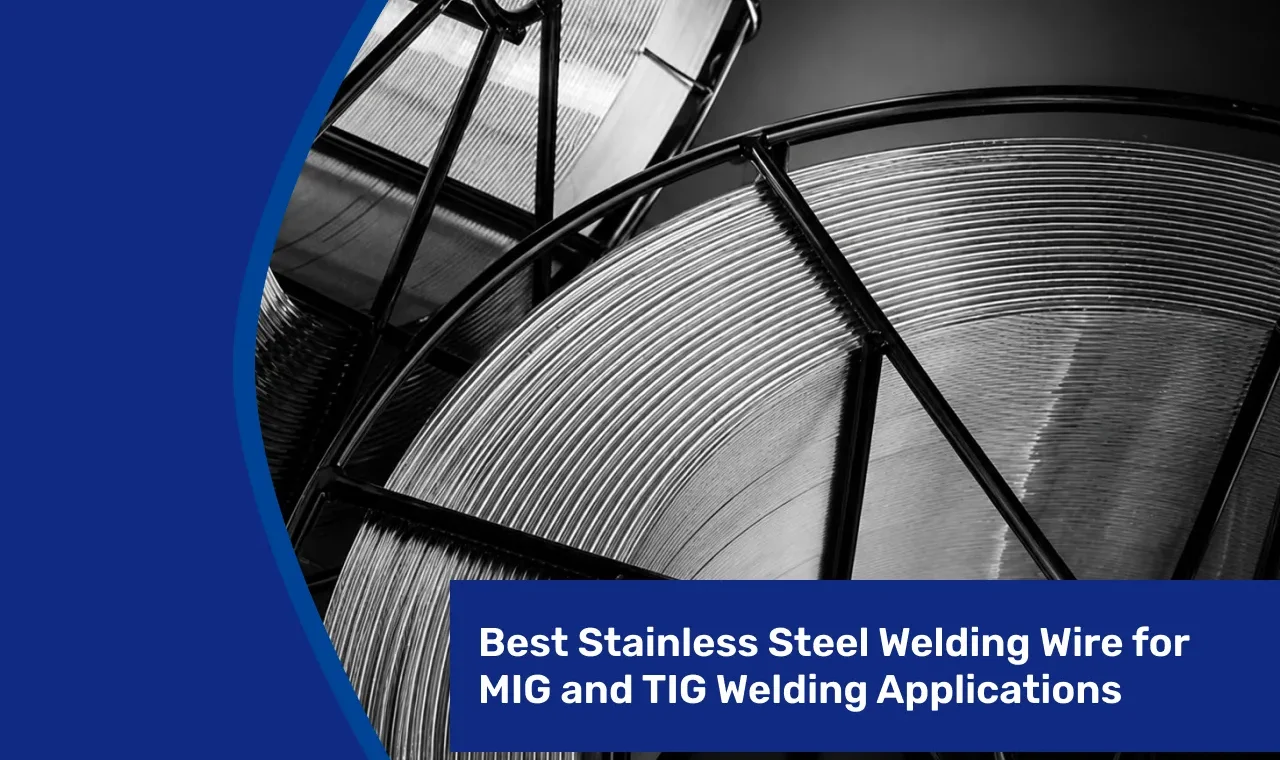
Selecting the right stainless steel welding wire is essential for achieving strong, durable, and corrosion-resistant welds. The choice of wire directly impacts weld quality, mechanical strength, and long-term performance across industries such as food processing, chemical manufacturing, construction, marine engineering, and general fabrication.
Stainless steel welding wires are designed to match specific base metals and service conditions. Factors like material compatibility, corrosion resistance, welding process, and operating environment play a key role in selecting the right grade.
Commonly used options include ER308L, ER316L, ER309L, and ER2209, which are widely applied in MIG and TIG welding.
In this guide, we’ll explore the best stainless steel welding wire grades, compare their features, and help you choose the right option for your application.
Best Stainless Steel Welding Wire for MIG and TIG Welding: Quick Answer
If you’re looking for the best stainless steel welding wire for MIG and TIG welding, the right choice depends on the base material and operating environment. If you want a more detailed selection approach, you can also check this guide on how to select the right stainless steel welding wire.
- ER308L is the best choice for welding 304 and 304L stainless steel in general fabrication and food processing applications.
- ER316L is ideal for marine, chemical, pharmaceutical, and corrosive environments where superior corrosion resistance is required.
- ER309L is commonly used for welding dissimilar metals and joining stainless steel to carbon steel.
- ER2209 is specifically designed for duplex stainless steel applications requiring high strength and exceptional corrosion resistance.
For most standard stainless steel fabrication projects, ER308L remains the most widely used and cost-effective option. However, applications exposed to chlorides, chemicals, or saltwater typically benefit from the enhanced corrosion resistance offered by ER316L.
Stainless Steel Welding Wire Comparison Table
The following table provides a quick comparison of the most commonly used stainless steel welding wire grades.
Welding Wire Grade | Best For | MIG Welding | TIG Welding | Corrosion Resistance |
ER308L | 304/304L Stainless Steel | ✓ | ✓ | Excellent |
ER316L | Marine & Chemical Applications | ✓ | ✓ | Superior |
ER309L | Dissimilar Metal Welding | ✓ | ✓ | Excellent |
ER2209 | Duplex Stainless Steel | ✓ | ✓ | Outstanding |
Quick Selection Guide
Application | Recommended Welding Wire |
304 Stainless Steel Fabrication | ER308L |
Food Processing Equipment | ER308L |
Chemical Processing Plants | ER316L |
Pharmaceutical Equipment | ER316L |
Marine and Offshore Structures | ER316L |
Stainless Steel to Carbon Steel Welding | ER309L |
Duplex Stainless Steel Components | ER2209 |
Stainless Steel Welding Wire Grades at a Glance
Understanding the characteristics of different stainless steel welding wire grades can help ensure optimal weld quality and long-term performance.
ER308L Stainless Steel Welding Wire
ER308L is the most widely used stainless steel welding wire for welding 304 and 304L stainless steel. It offers excellent weldability, good corrosion resistance, and cost-effective performance.
Key Features:
- Low carbon content
- Excellent weldability and arc stability
- Good corrosion resistance
- Suitable for MIG and TIG welding
Common Applications:
- Food processing equipment
- Storage tanks
- Kitchen equipment
- Structural fabrication
ER316L Stainless Steel Welding Wire
ER316L contains molybdenum, providing superior resistance to corrosion, chlorides, and harsh chemicals.
Key Features:
- Superior corrosion resistance
- Excellent chloride and saltwater resistance
- High resistance to pitting corrosion
- Suitable for MIG and TIG welding
Common Applications:
- Marine equipment
- Chemical processing plants
- Pharmaceutical equipment
- Water treatment facilities
ER309L Stainless Steel Welding Wire
ER309L is primarily used for welding dissimilar metals, including stainless steel to carbon steel.
Key Features:
- Excellent crack resistance
- Strong weld strength
- Reliable dissimilar metal welding performance
Common Applications:
- Stainless steel to carbon steel welding
- Cladding applications
- Structural repairs
- Maintenance welding
ER2209 Stainless Steel Welding Wire
ER2209 is designed for duplex stainless steel applications requiring high strength and exceptional corrosion resistance.
Key Features:
- High tensile strength
- Excellent resistance to stress corrosion cracking
- Superior corrosion resistance
Common Applications:
- Duplex stainless steel fabrication
- Oil and gas equipment
- Offshore structures
- Chemical processing systems
ER308L is best for 304/304L stainless steel, ER316L is ideal for corrosive environments, ER309L is used for dissimilar metal welding, and ER2209 is recommended for duplex stainless steel applications.
Factors to Consider When Choosing Stainless Steel Welding Wire
Selecting the right stainless steel welding wire requires evaluating factors such as base metal compatibility, welding process, corrosion resistance, and service conditions.
Base Metal Compatibility
Always match the welding wire to the base metal for optimal weld strength and corrosion resistance.
Base Metal | Recommended Welding Wire |
304/304L Stainless Steel | ER308L |
316/316L Stainless Steel | ER316L |
Stainless Steel to Carbon Steel | ER309L |
Duplex Stainless Steel | ER2209 |
Welding Process (MIG or TIG)
The welding process influences wire selection and weld performance.
MIG Welding (GMAW) is ideal for:
- High production environments
- Faster welding speeds
- Automated fabrication
- Industrial manufacturing
TIG Welding (GTAW) is preferred for:
- Precision welding
- High-quality weld finishes
- Thin materials
- Critical applications
Most stainless steel welding wire grades are suitable for both MIG and TIG welding.
Corrosion Resistance Requirements
Environmental exposure is a key consideration when selecting welding wire.
Consider exposure to:
- Saltwater
- Chlorides
- Chemicals
- High humidity
- Corrosive industrial conditions
For aggressive environments, ER316L or ER2209 generally provides better corrosion resistance than ER308L.
Operating Environment
The application environment significantly impacts welding wire selection.
Common industries include:
- Food processing
- Chemical processing
- Pharmaceutical manufacturing
- Marine and offshore operations
- Industrial fabrication
Choosing a wire suited to the operating environment helps improve durability and service life.
Mechanical Strength Requirements
Applications involving pressure vessels, offshore structures, heavy equipment, or duplex stainless steel often require higher-strength welding wire grades such as ER2209.
Industry Standards and Certifications
Verify compliance with relevant standards, including:
- AWS A5.9
- ASME specifications
- ISO standards
Quality certifications and material test certificates help ensure consistent performance and reliability.
How Welding Wire Grade Affects Weld Performance
The grade of stainless steel welding wire directly influences weld quality, corrosion resistance, strength, and long-term durability. Selecting the right filler metal helps ensure reliable performance under specific operating conditions.
Corrosion Resistance
Different welding wire grades offer varying levels of corrosion protection.
- ER308L provides excellent corrosion resistance for general-purpose applications.
- ER316L offers superior resistance to chlorides, saltwater, and aggressive chemicals.
- ER2209 delivers outstanding resistance to pitting, crevice corrosion, and stress corrosion cracking.
Choosing the appropriate welding wire helps extend service life and reduce maintenance costs.
Weld Strength and Durability
The mechanical properties of the filler metal affect the strength and reliability of the welded joint. Proper wire selection helps create welds that can withstand pressure, heavy loads, and demanding service conditions.
Applications such as pipelines, pressure vessels, and industrial equipment often require high-strength welding wire grades.
Crack Resistance
Low-carbon stainless steel welding wires such as ER308L and ER316L help reduce carbide precipitation and minimize the risk of weld cracking. This improves weld integrity and long-term performance.
Long-Term Service Life
Using the correct welding wire helps protect welded components from corrosion, wear, and environmental damage over time.
Benefits include:
- Reduced maintenance requirements
- Lower replacement costs
- Improved equipment reliability
- Longer service life
Selecting the correct welding wire grade improves corrosion resistance, weld strength, crack resistance, and overall performance, helping ensure durable and reliable welds.
Top Stainless Steel Welding Wire Grades for MIG and TIG Welding
Several stainless steel welding wire grades are used for MIG and TIG welding, each designed for specific materials and service conditions.
ER308L – Best for 304 and 304L Stainless Steel
ER308L is the most widely used stainless steel welding wire for general fabrication and manufacturing applications.
Key Features:
- Low carbon content
- Excellent weldability
- Good corrosion resistance
- Suitable for MIG and TIG welding
Common Applications:
- Food processing equipment
- Storage tanks
- Stainless steel piping
- Architectural fabrication
ER308L is the preferred choice for welding 304 and 304L stainless steel.
ER316L – Best for Marine and Chemical Environments
ER316L contains molybdenum, providing enhanced resistance to corrosion, chlorides, and harsh chemicals.
Key Features:
- Superior corrosion resistance
- Excellent chloride resistance
- High weld quality
- Suitable for MIG and TIG welding
Common Applications:
- Marine equipment
- Chemical processing plants
- Pharmaceutical facilities
- Water treatment systems
ER316L is ideal for applications exposed to saltwater, chemicals, and high humidity.
ER309L – Best for Dissimilar Metal Welding
ER309L is commonly used for joining stainless steel to carbon steel and other dissimilar metals.
Key Features:
- Excellent crack resistance
- Strong weld strength
- Reliable dissimilar metal welding performance
Common Applications:
- Stainless steel-to-carbon steel welding
- Cladding applications
- Structural repairs
- Maintenance welding
ER309L is the preferred choice for dissimilar metal welding applications.
ER2209 – Best for Duplex Stainless Steel
ER2209 is designed for duplex stainless steel applications requiring high strength and corrosion resistance.
Key Features:
- High tensile strength
- Excellent corrosion resistance
- Superior resistance to stress corrosion cracking
Common Applications:
- Duplex stainless steel fabrication
- Oil and gas equipment
- Offshore structures
- Chemical processing systems
ER2209 is widely used in demanding industrial environments where both strength and corrosion resistance are critical.
ER308L is best for 304/304L stainless steel, ER316L for corrosive environments, ER309L for dissimilar metal welding, and ER2209 for duplex stainless steel applications.
Best Stainless Steel Welding Wire for MIG Welding Applications
MIG welding (GMAW) is widely used for stainless steel fabrication because of its speed, efficiency, and suitability for high-volume production.
Recommended Wire Grades for MIG Welding
Welding Wire Grade | Typical Application |
ER308L | 304/304L Stainless Steel |
ER316L | Marine & Chemical Applications |
ER309L | Dissimilar Metal Welding |
ER2209 | Duplex Stainless Steel |
Advantages of MIG Welding
MIG welding offers several benefits, including:
- High welding speed
- Consistent weld quality
- Easy automation
- High productivity
Common MIG Welding Applications
MIG welding with stainless steel wire is commonly used for:
- Food processing equipment
- Storage tanks
- Industrial machinery
- Structural fabrication
- Automotive components
ER308L is the most common choice for general stainless steel fabrication, while ER316L is preferred for corrosive environments and marine applications.
Best Stainless Steel Welding Wire for TIG Welding Applications
TIG welding (GTAW) is preferred for applications that require precise control, clean welds, and superior weld quality.
Recommended Wire Grades for TIG Welding
Welding Wire Grade | Typical Application |
ER308L | 304/304L Stainless Steel |
ER316L | Marine & Chemical Applications |
ER309L | Dissimilar Metal Welding |
ER2209 | Duplex Stainless Steel |
Advantages of TIG Welding
TIG welding offers several benefits, including:
- Excellent weld appearance
- Precise heat control
- Minimal spatter
- High-quality weld finishes
- Superior weld precision
Common TIG Welding Applications
TIG welding is widely used for:
- Pharmaceutical equipment
- Food-grade stainless steel fabrication
- Aerospace components
- Chemical processing equipment
- Precision industrial fabrication
TIG welding is ideal for applications where weld quality, appearance, and precision are more important than production speed.
MIG vs TIG Welding: Which Process Is Better for Stainless Steel?
Both MIG and TIG welding can produce excellent stainless steel welds, but each process offers distinct advantages depending on the application.
Factor | MIG Welding | TIG Welding |
Welding Speed | Faster | Slower |
Productivity | High | Moderate |
Weld Appearance | Good | Excellent |
Precision | Good | Superior |
Automation Capability | Excellent | Limited |
Operator Skill Requirement | Moderate | High |
Ideal for Production Work | Yes | Limited |
Ideal for Precision Work | Limited | Yes |
Weld Quality
TIG welding produces cleaner, more precise, and aesthetically superior welds, making it ideal for critical and high-precision applications.
Productivity
MIG welding offers higher deposition rates and faster welding speeds, making it more suitable for large-scale manufacturing and fabrication.
Cost Considerations
MIG welding is generally more cost-effective for high-volume production, while TIG welding may involve higher labor costs due to slower operation and higher skill requirements.
Application Suitability
Use MIG welding for:
- High-volume fabrication
- Industrial manufacturing
- Automated welding systems
Use TIG welding for:
- Precision fabrication
- Thin stainless steel materials
- High-quality cosmetic welds
Both processes can deliver excellent results when paired with the appropriate stainless steel welding wire grade.
Applications of Stainless Steel Welding Wire Across Industries
Stainless steel welding wire is widely used across industries due to its strength, corrosion resistance, and durability. The correct wire grade ensures reliable performance in different operating environments. You can understand more about its usage across different sectors in industrial applications.
Food Processing Equipment
The food industry requires hygienic, corrosion-resistant materials that can withstand frequent cleaning and moisture exposure.
Applications:
- Food storage tanks
- Conveyor systems
- Kitchen equipment
- Dairy and brewing systems
Common Wire Used: ER308L (general), ER316L (high corrosion resistance)
Chemical Processing Plants
Chemical environments involve exposure to aggressive and corrosive substances.
Applications:
- Storage tanks
- Reactors
- Pipelines
- Heat exchangers
Common Wire Used: ER316L
Pharmaceutical Industry
This industry requires high purity, cleanliness, and corrosion resistance.
Applications:
- Processing equipment
- Storage vessels
- Piping systems
- Mixing tanks
Common Wire Used: ER316L
Marine and Offshore Structures
Marine environments demand excellent resistance to saltwater and chlorides.
Applications:
- Shipbuilding
- Offshore platforms
- Coastal infrastructure
- Desalination plants
Common Wire Used: ER316L
Construction and Infrastructure
Used in structural applications requiring strength and durability.
Applications:
- Bridges
- Handrails
- Building facades
- Structural frameworks
Common Wire Used: ER308L
Automotive Manufacturing
Used in both structural and exhaust-related components.
Applications:
- Exhaust systems
- Fuel systems
- Structural assemblies
- Specialty vehicles
Common Wire Used: ER308L, ER309L, ER316L (depending on requirement)
Common Mistakes to Avoid When Selecting Stainless Steel Welding Wire
Choosing the wrong stainless steel welding wire can negatively impact weld quality, corrosion resistance, and long-term performance. You can avoid common errors by understanding typical stainless steel wire buying mistakes before selecting the right material.
Choosing the Wrong Wire Grade
Selecting a filler metal that does not match the base material can lead to weak welds and poor corrosion resistance.
Common mistakes include:
- Using ER308L for 316 stainless steel applications
- Using general-purpose wire in highly corrosive environments
Always ensure the welding wire is compatible with both the base metal and service conditions.
Ignoring Corrosion Resistance Requirements
Environmental conditions play a critical role in welding wire selection. Ignoring exposure to saltwater, chlorides, chemicals, or humidity can result in premature corrosion and failure.
For harsh environments, ER316L or ER2209 is typically required for better protection and durability.
Mismatching Wire and Base Metal
Proper matching ensures strong welds and long-term reliability:
- 304/304L → ER308L
- 316/316L → ER316L
- Dissimilar metals → ER309L
- Duplex stainless steel → ER2209
Incorrect matching can reduce strength and corrosion resistance.
Overlooking Industry Standards and Certifications
Always verify compliance with industry standards before selecting welding wire.
Check for:
- AWS A5.9 compliance
- ASME requirements
- ISO standards
- Material test certificates
- Traceability documentation
Using certified welding consumables ensures consistent quality, safety, and performance.
How to Choose the Best Stainless Steel Welding Wire for Your Application
Selecting the right stainless steel welding wire is essential for achieving strong welds, corrosion resistance, and long-term durability. The correct choice depends on base material, service conditions, performance needs, and industry standards.
Identify the Base Material
The first step is to match the welding wire with the base metal. For 304/304L stainless steel, use ER308L. For 316/316L stainless steel, use ER316L due to higher corrosion resistance. For welding stainless steel to carbon steel, ER309L is recommended. For duplex stainless steel, ER2209 is the correct choice. Proper matching ensures strong, crack-free, and corrosion-resistant welds.
Assess Service Conditions
Evaluate the working environment before selecting the welding wire. Exposure to moisture, saltwater, chemicals, high heat, or industrial conditions affects performance. In harsh environments such as marine, offshore, and chemical industries, ER316L or ER2209 is preferred for superior corrosion resistance and long-term reliability.
Compare Cost and Performance
Cost should be balanced with performance requirements. ER308L is ideal for general fabrication and cost-sensitive projects. ER316L offers better protection for corrosive environments, while ER2209 delivers high strength and durability for critical industrial applications. Choosing the right grade helps reduce maintenance costs and improve service life.
Verify Industry Requirements
Always ensure compliance with industry standards such as AWS A5.9, ASME codes, ISO standards, and project specifications. Certified welding wire guarantees consistent quality, safety, and reliability in industrial applications.
Conclusion
Selecting the best stainless steel welding wire for MIG and TIG welding is essential for achieving strong, durable, and corrosion-resistant welds. The right choice depends on the base material, operating environment, and performance requirements. You can explore more detailed insights on stainless steel welding wire types and applications to better understand how each grade performs in real-world use.
ER308L is ideal for welding 304/304L stainless steel in general fabrication, food processing, and structural applications due to its good corrosion resistance and cost-effectiveness. ER316L is preferred for marine, chemical, pharmaceutical, and water treatment applications where higher resistance to chlorides and harsh environments is required.
For specialized needs, ER309L is used for dissimilar metal welding, while ER2209 is best suited for duplex stainless steel applications requiring high strength and superior corrosion resistance.
Choosing the correct welding wire ensures better weld quality, longer service life, reduced maintenance, and reliable performance across industrial applications. To buy stainless steel welding wire, contact our team for product details, pricing, and assistance.
Frequently Asked Questions
What is the best stainless steel welding wire for MIG welding?
ER308L is generally the best choice for MIG welding 304 and 304L stainless steel. For marine and chemical environments, ER316L is preferred due to its higher corrosion resistance.
What is the best stainless steel welding wire for TIG welding?
ER308L and ER316L are the most commonly used wires for TIG welding. The best option depends on the base material and operating conditions.
Is ER308L better than ER316L?
Neither is better overall. ER308L is ideal for general fabrication, while ER316L offers superior corrosion resistance in harsh and chloride-rich environments.
Can the same stainless steel welding wire be used for MIG and TIG welding?
Yes, most grades such as ER308L, ER316L, ER309L, and ER2209 can be used for both MIG and TIG welding applications.
Which welding wire is best for marine environments?
ER316L is the preferred choice for marine and coastal applications due to its excellent resistance to saltwater and chloride corrosion.
How do I choose the correct stainless steel welding wire?
Choose based on base metal, corrosion resistance needs, operating environment, welding process, and industry standards.
What is ER309L welding wire used for?
ER309L is mainly used for welding dissimilar metals, such as stainless steel to carbon steel, and for cladding applications.
Which industries use stainless steel welding wire?
It is widely used in food processing, pharmaceutical, chemical processing, marine, construction, automotive, and oil & gas industries.